
Living off-grid,
comfortably.
MORE SELF-SUFFICIENT · CHEAPER · HEALTHIER
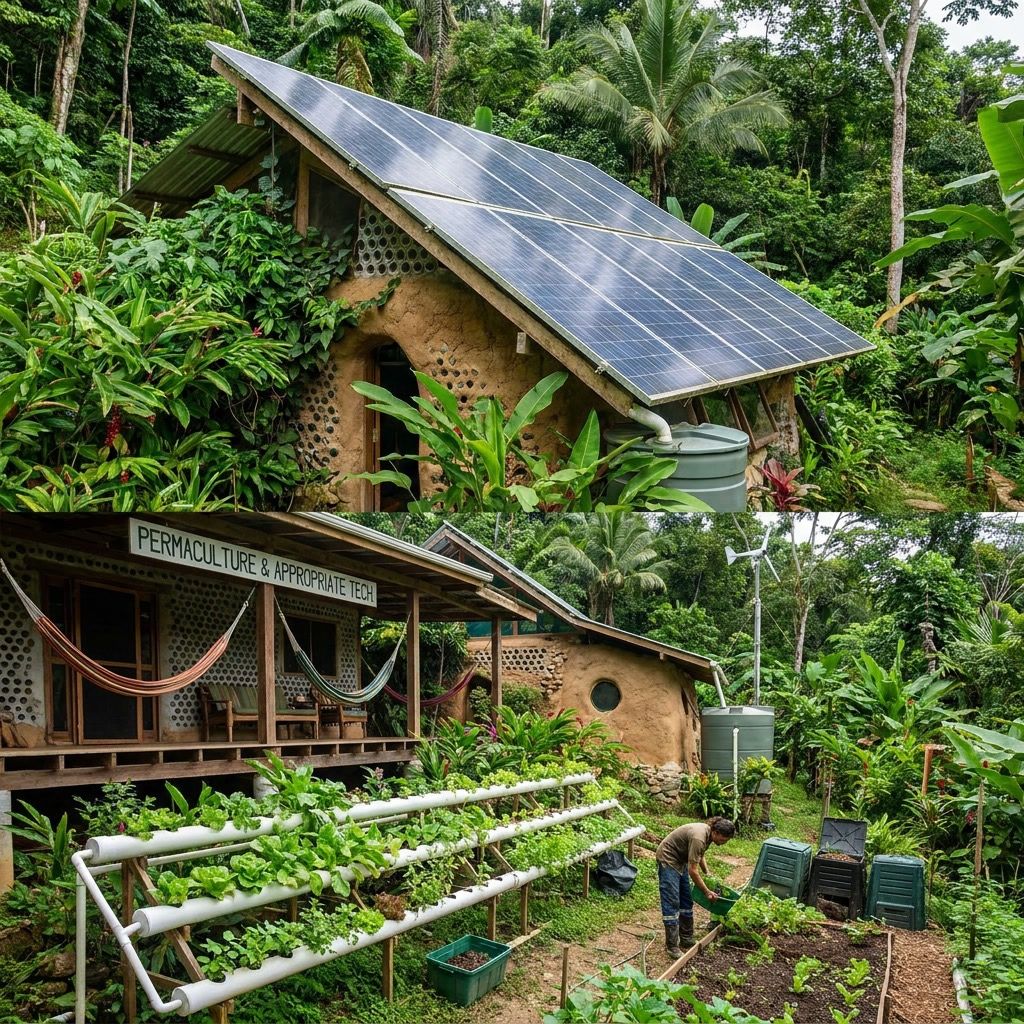
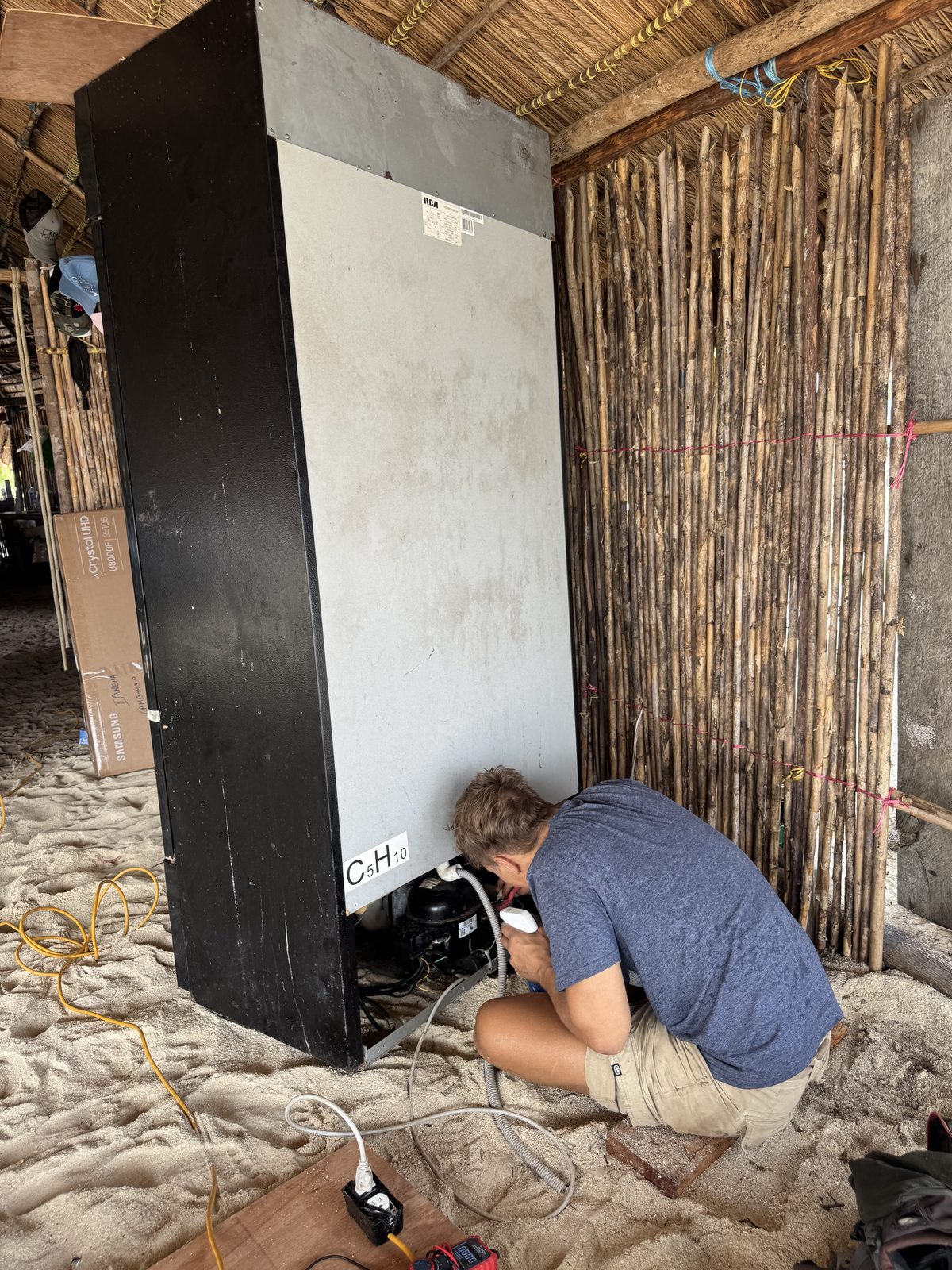
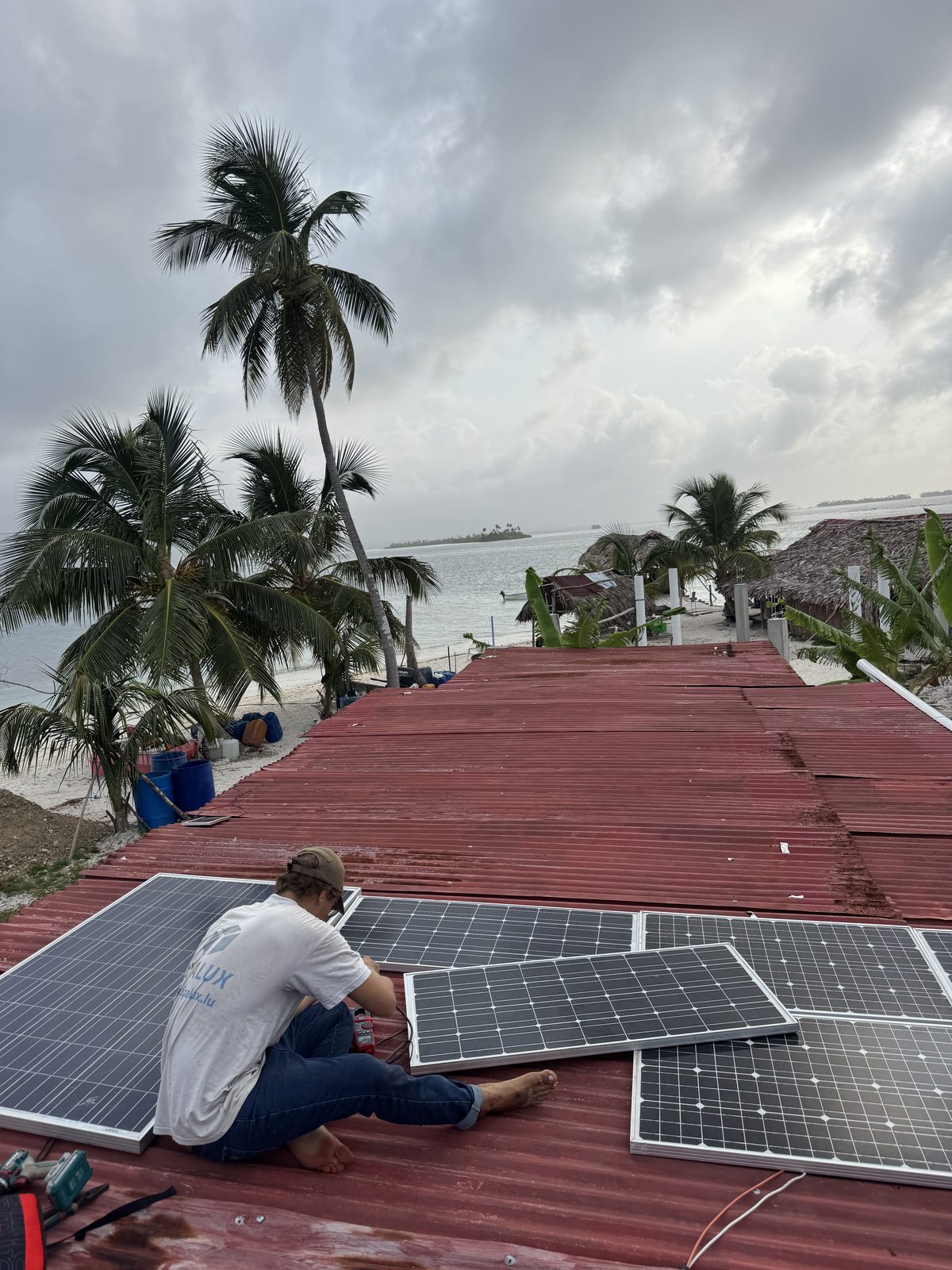
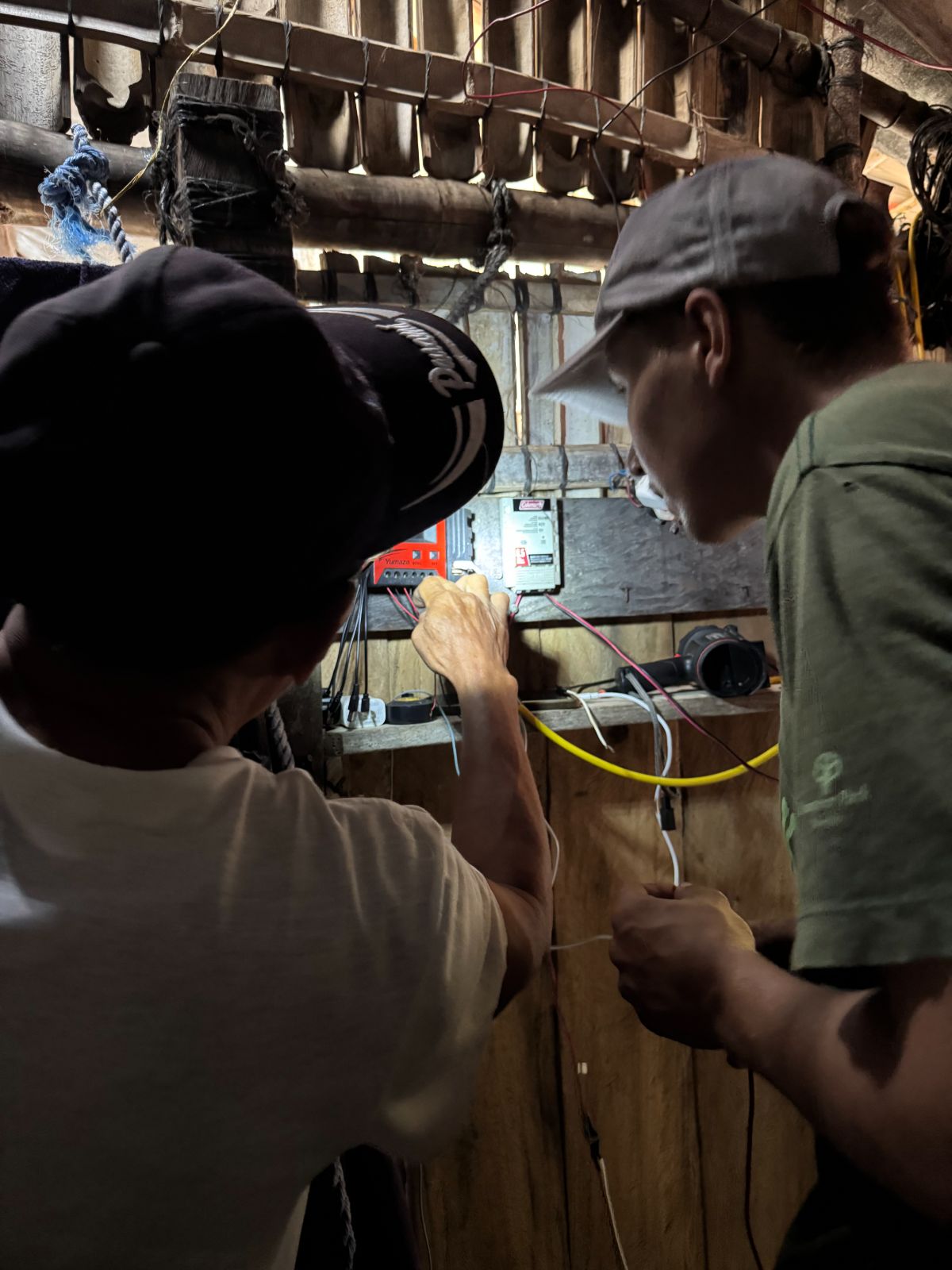
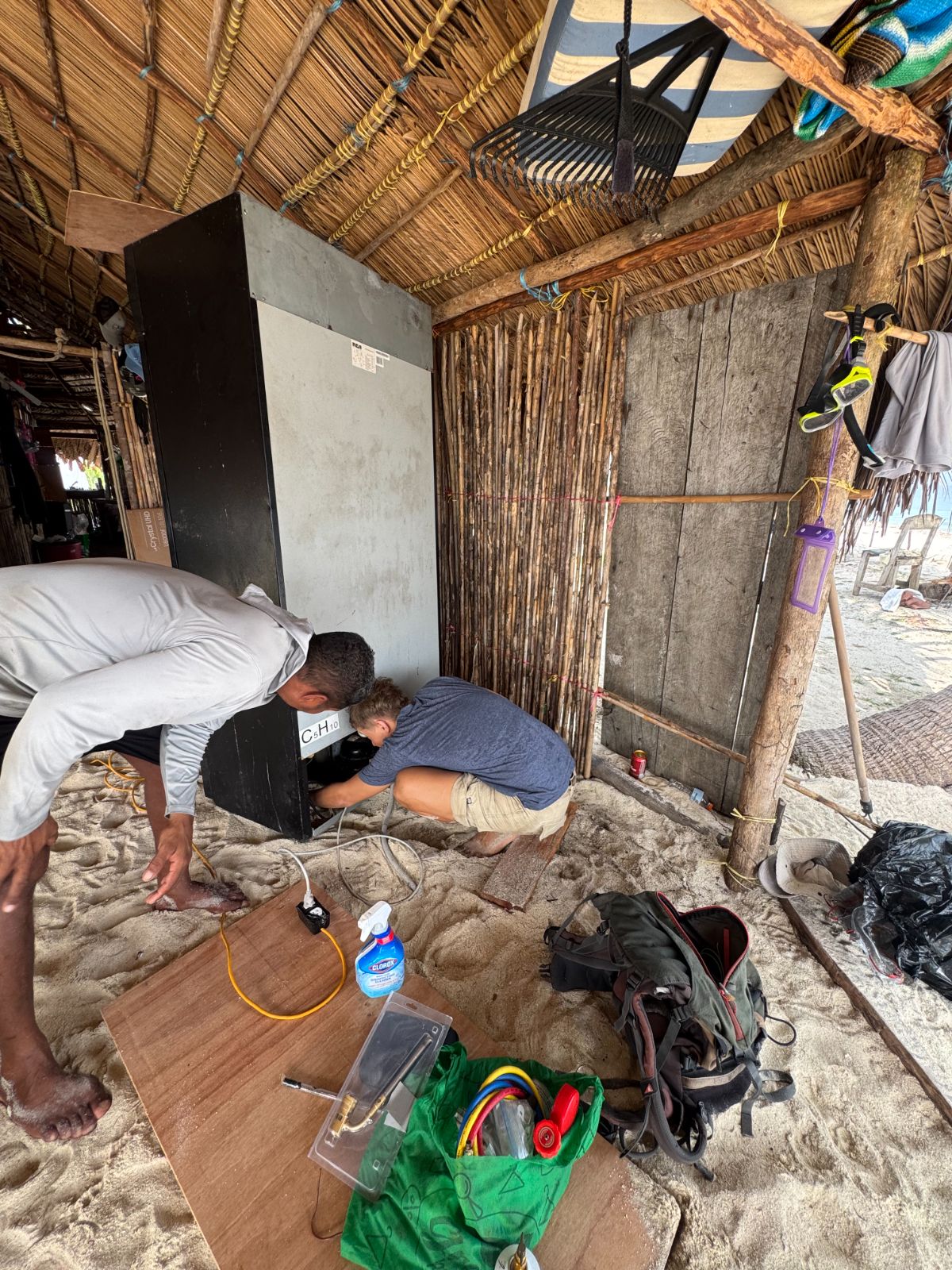
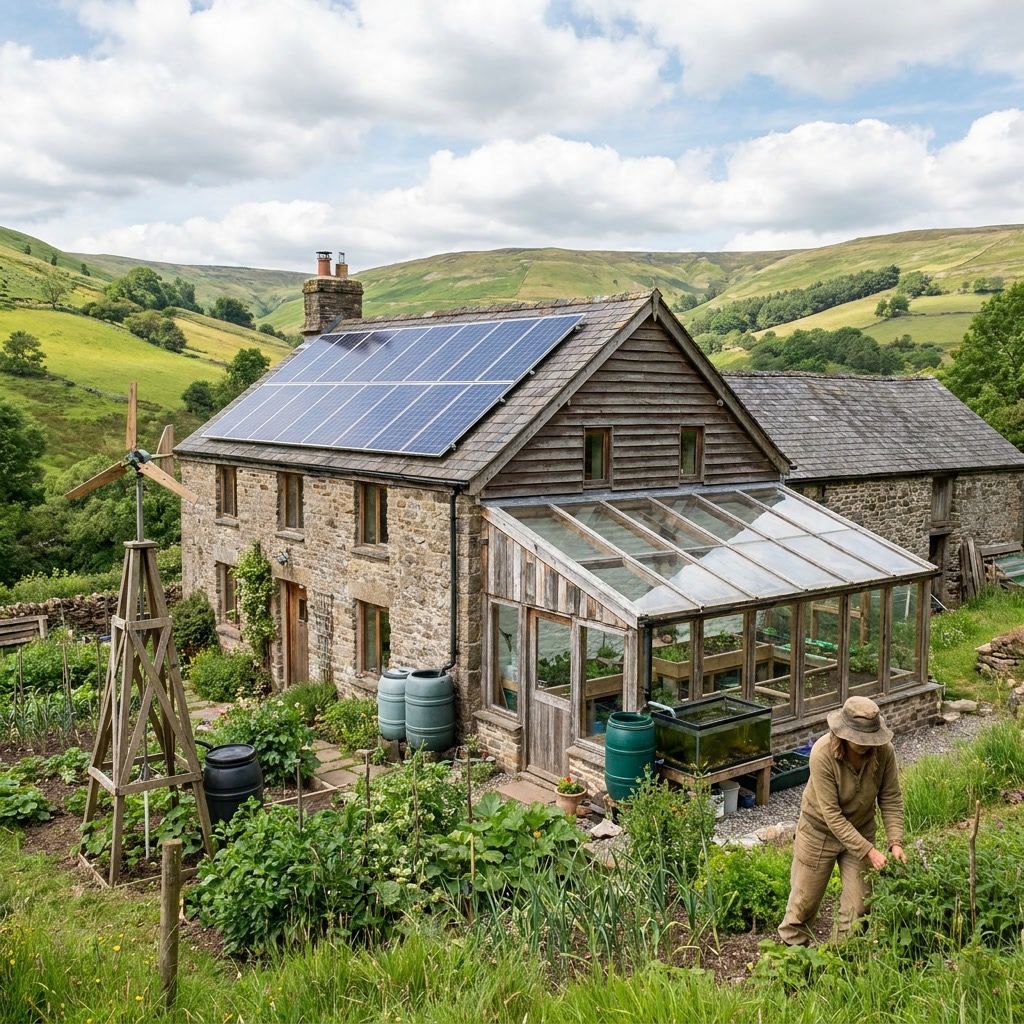
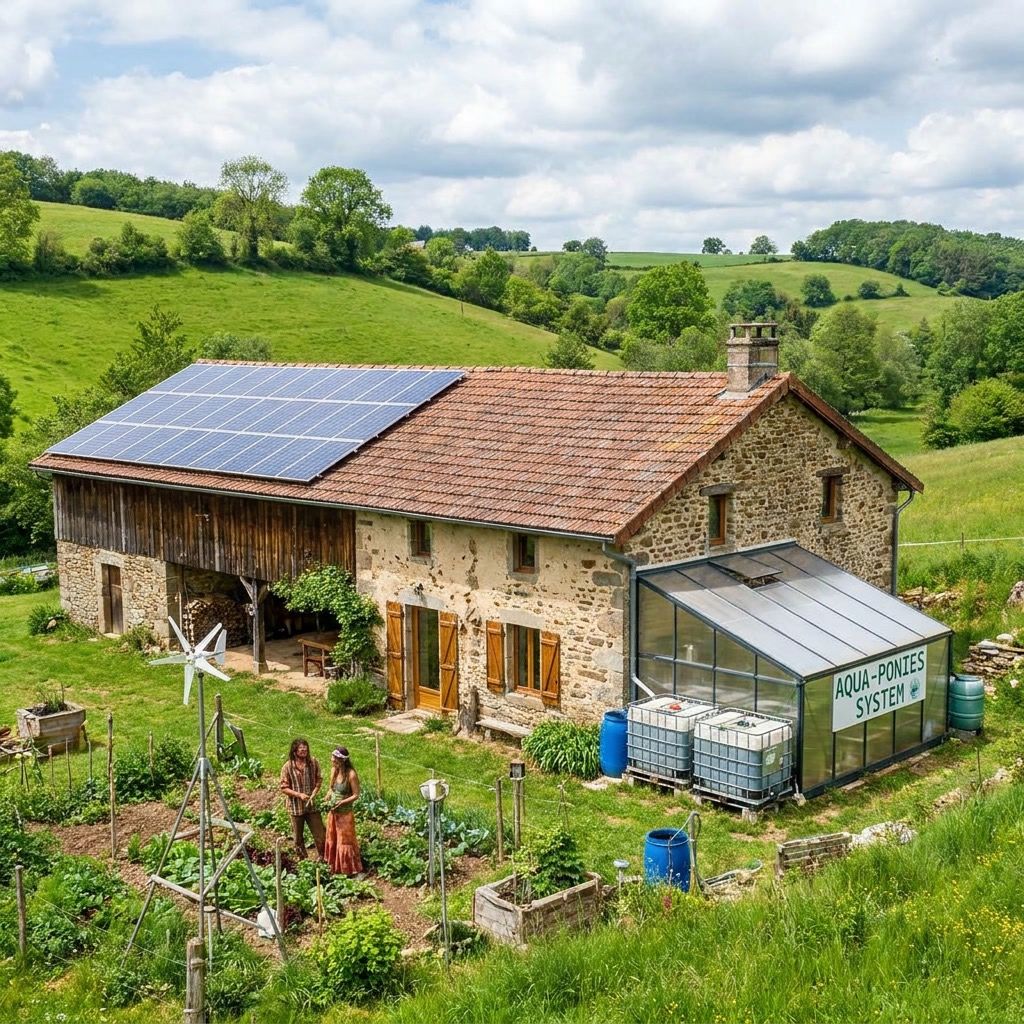
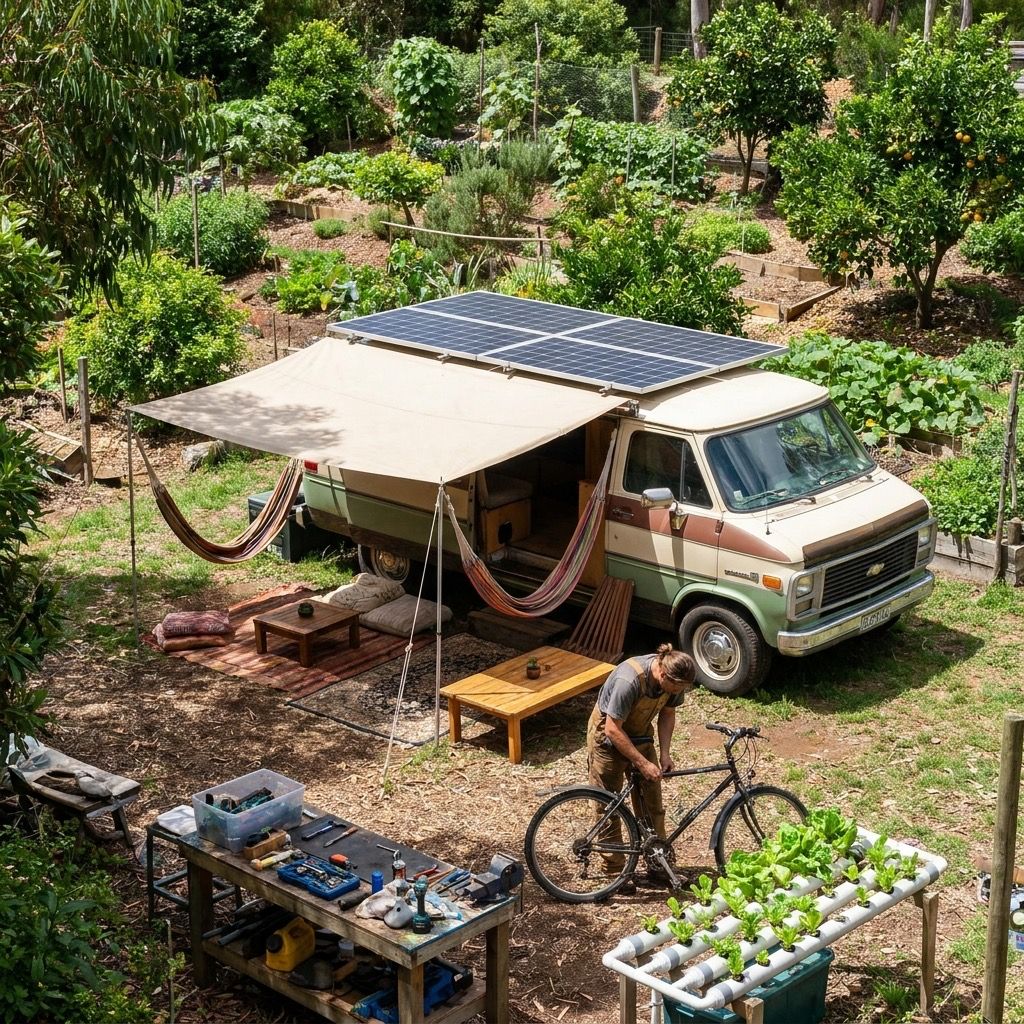
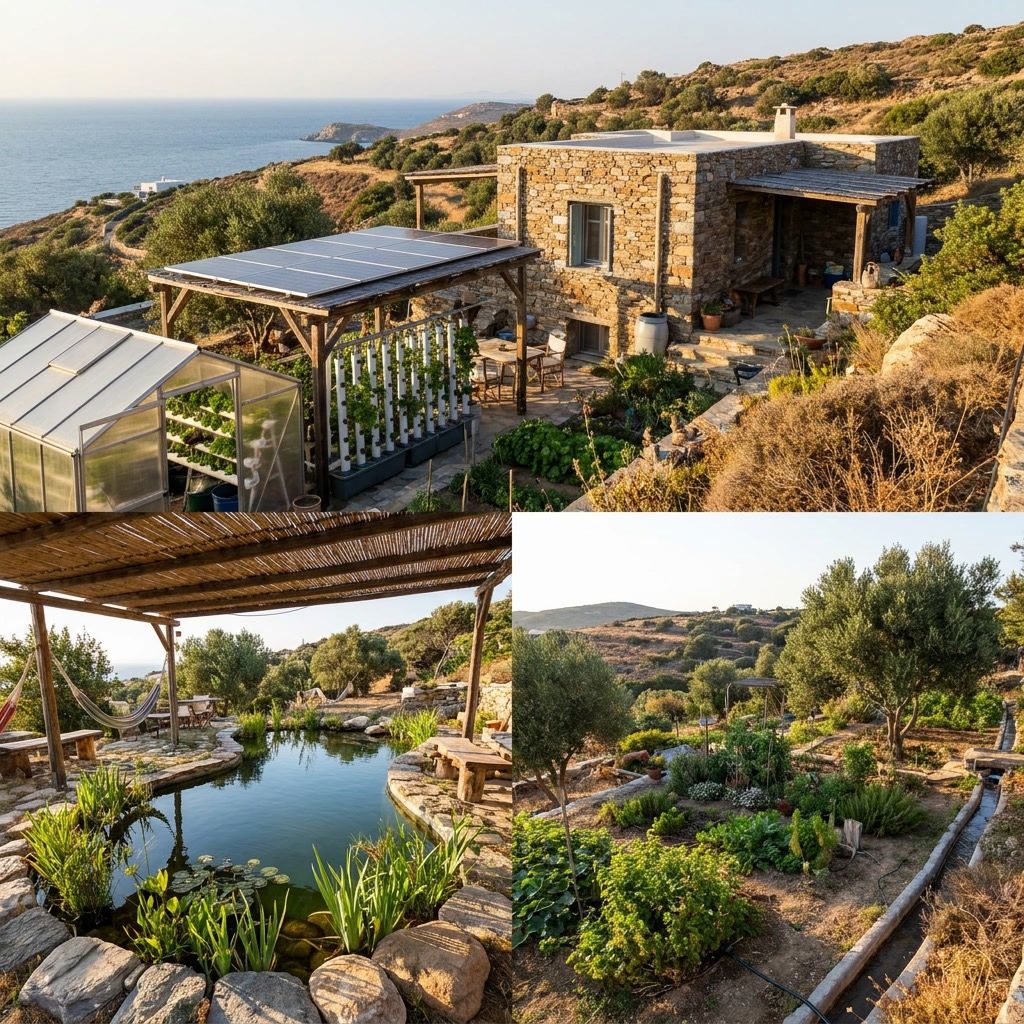
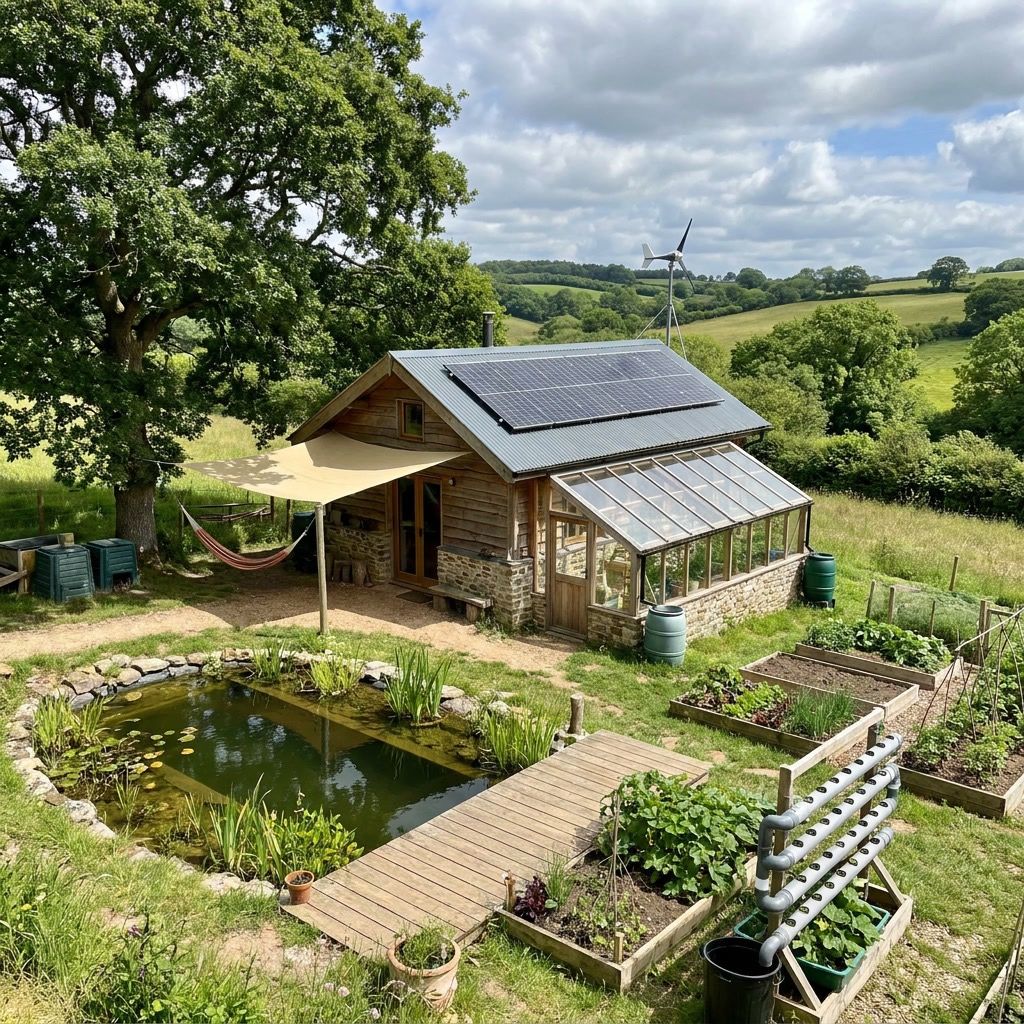
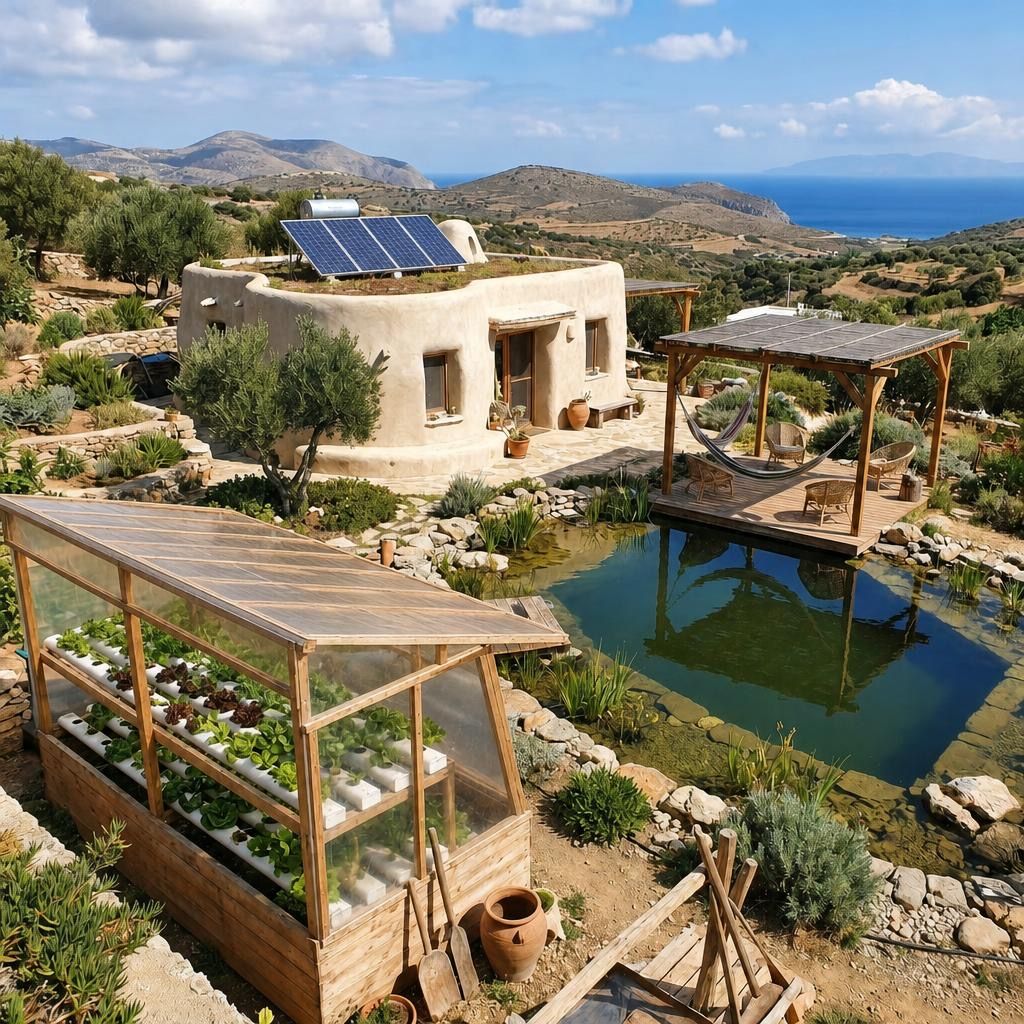
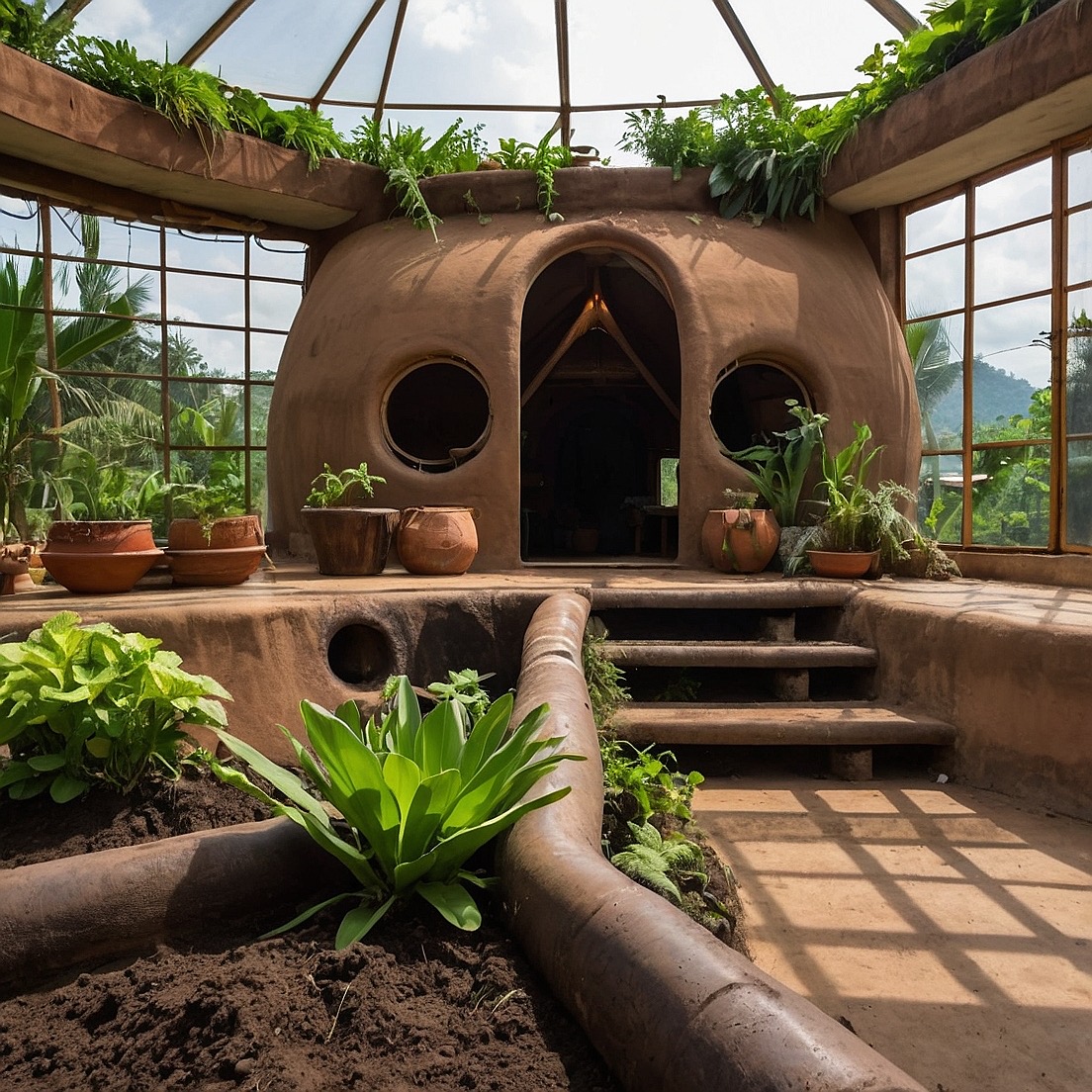
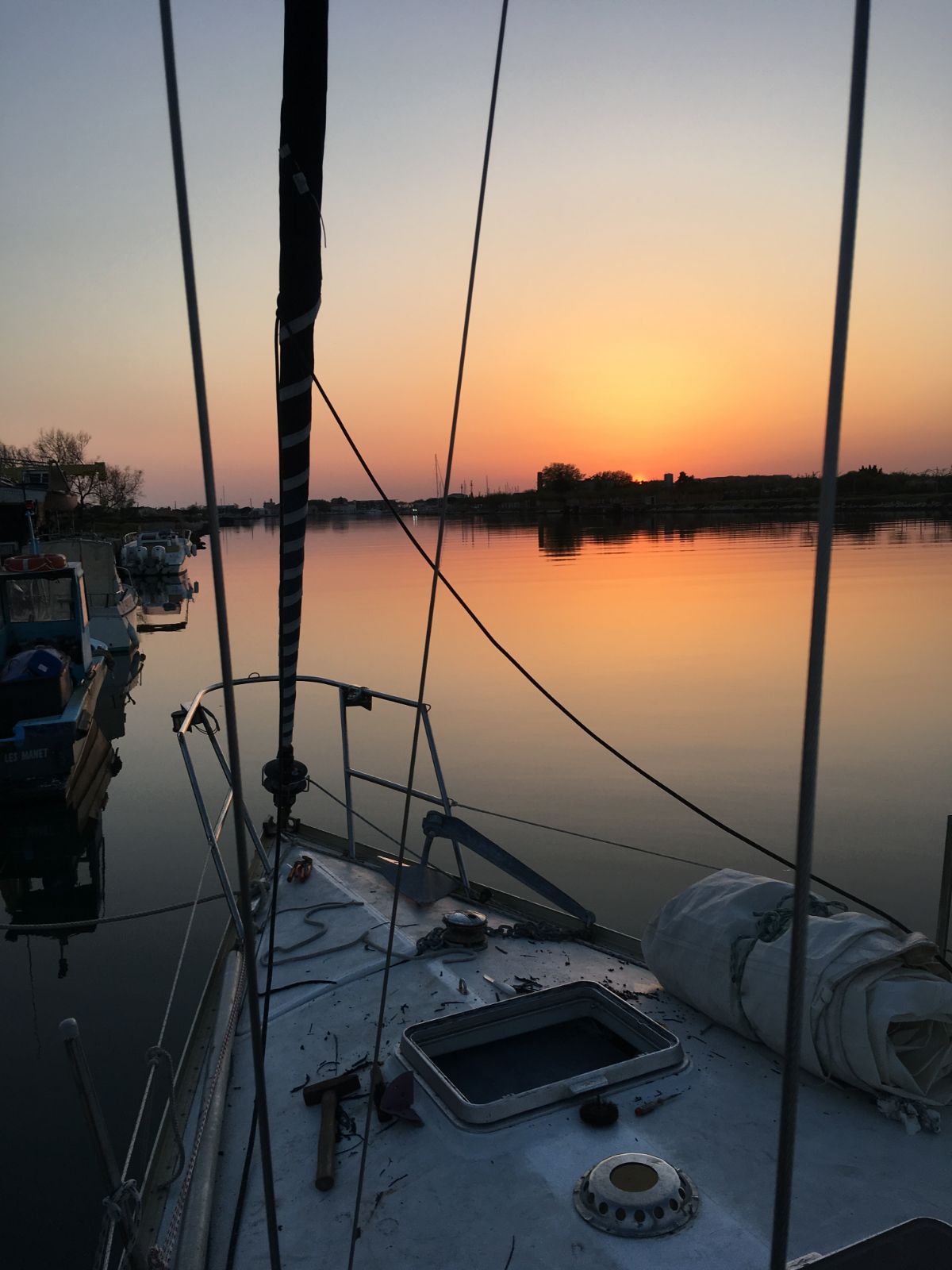
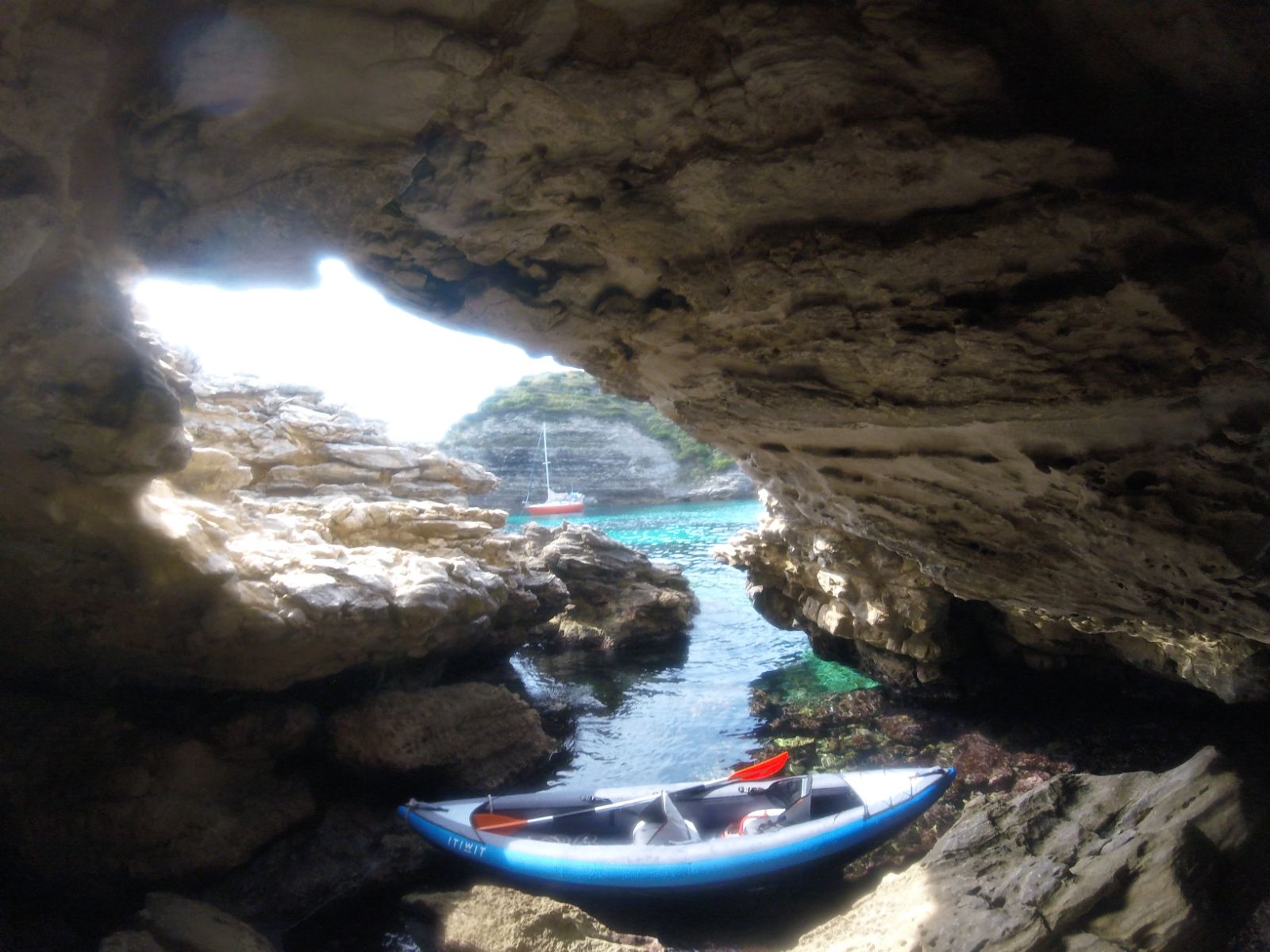
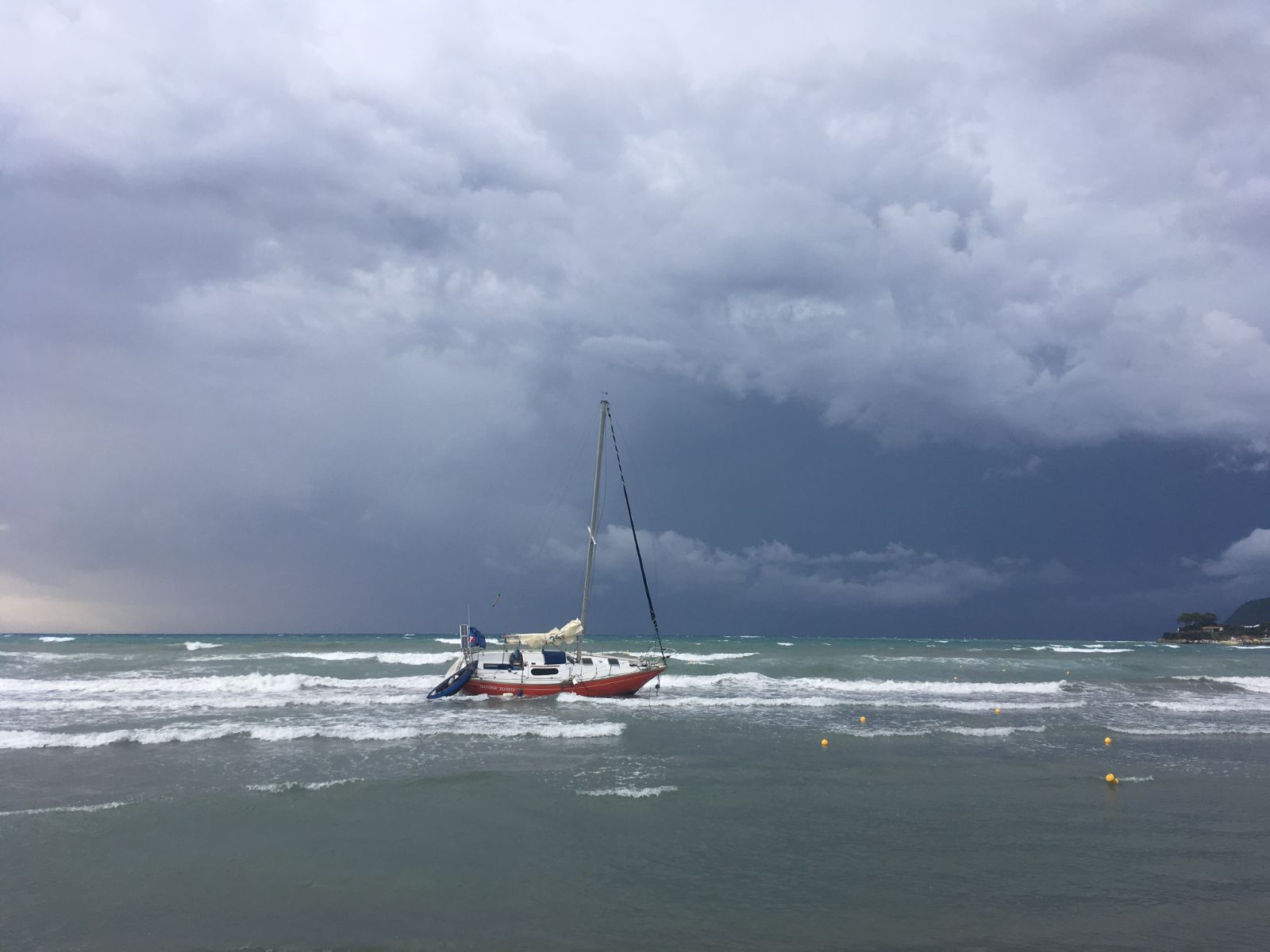
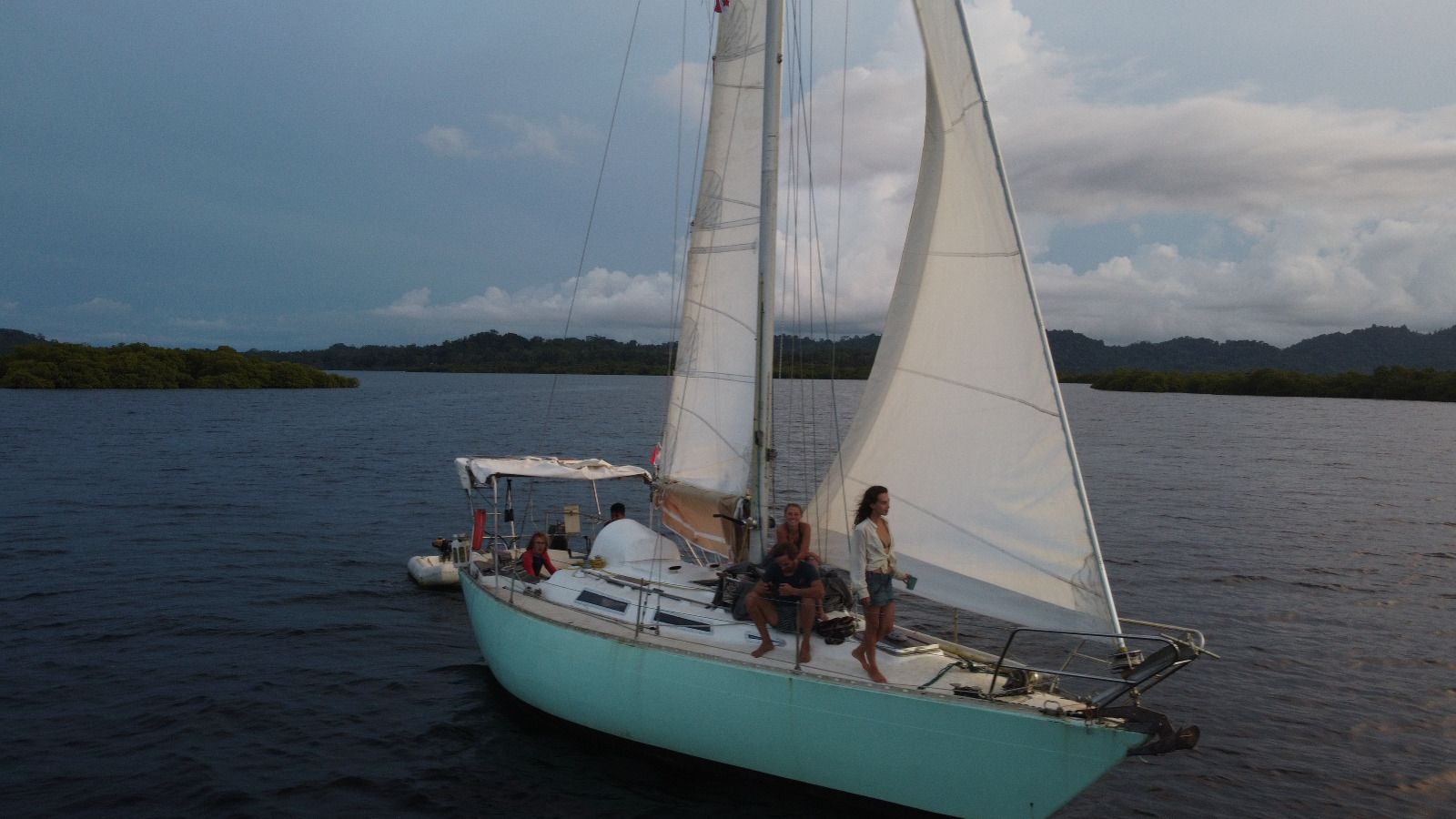
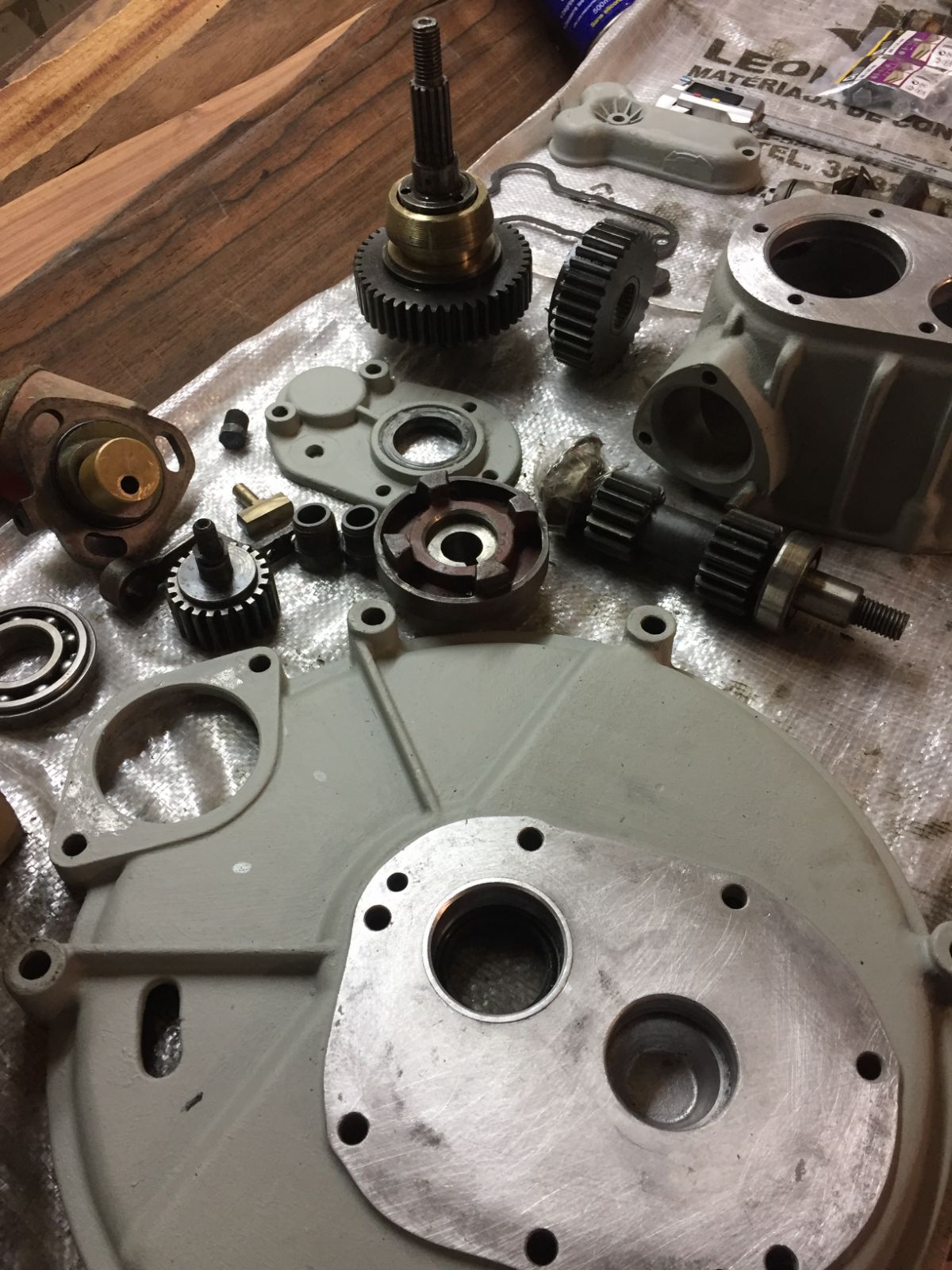
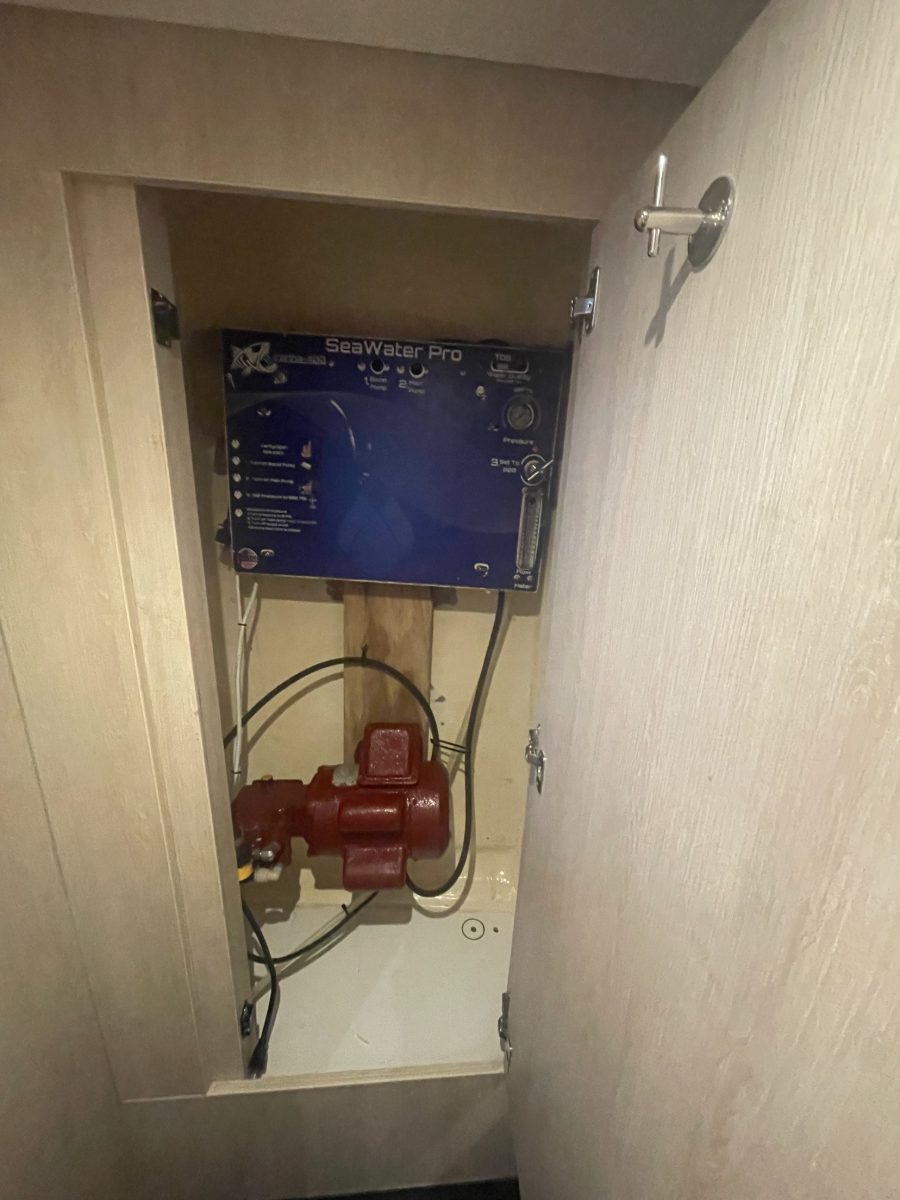
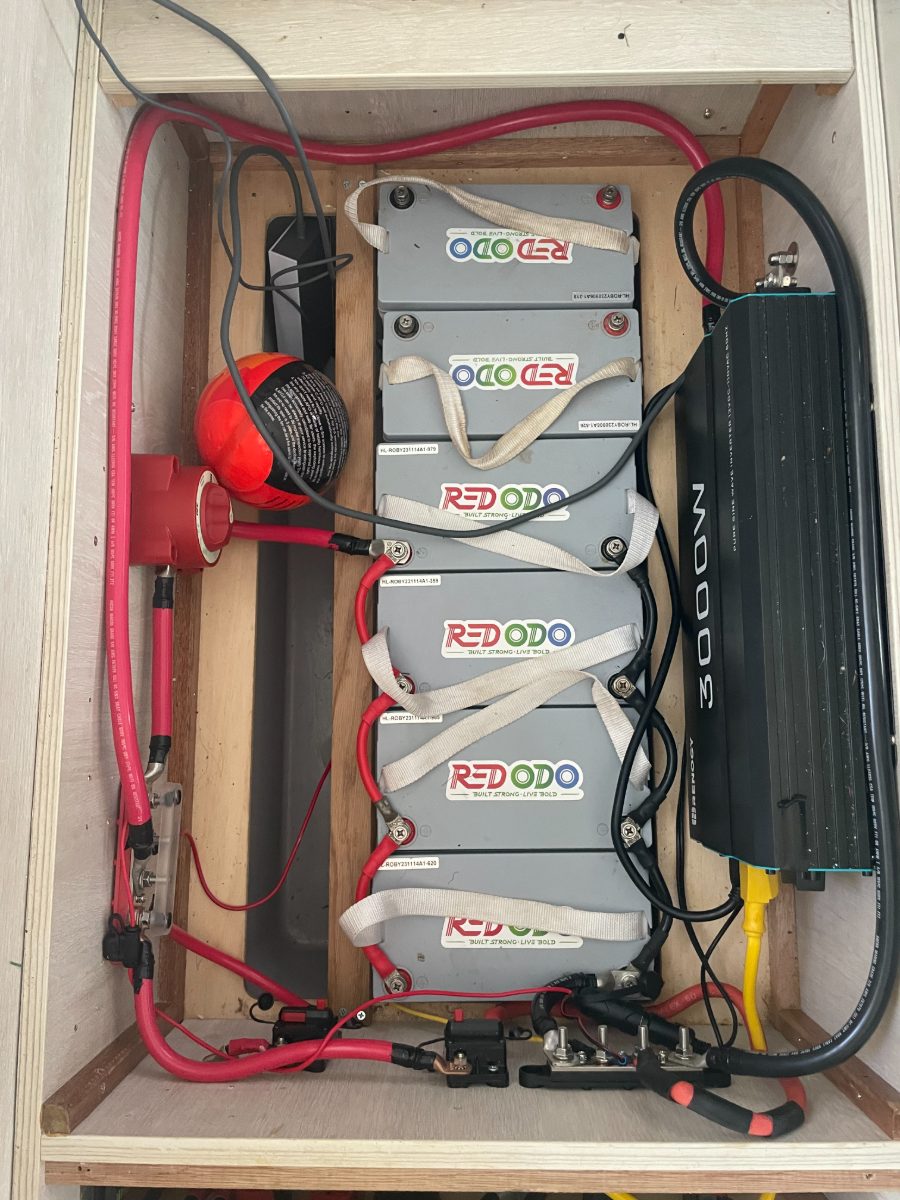
Living off-grid means owning the systems that keep you alive — power, water, food, waste, repair — instead of renting them. Learn them once and they cost less than a grid connection, demand less than the job that pays for one, and hand back cleaner water, better food and quieter days. Ten years in: the Mediterranean under sail, two years in the Costa Rican jungle, farms and homesteads in between, now an autonomous sailboat in the San Blas. Every system here is one I live on and repair myself.
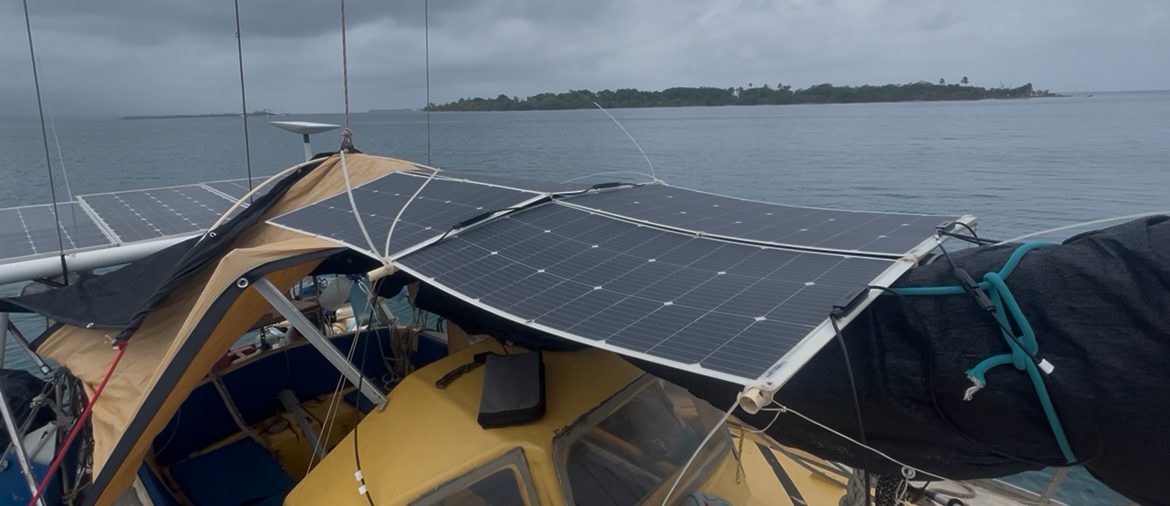
Land, van or boat, it is the same three problems: make power, make water, get rid of waste. What changes is how much space and how much movement you have to work with, so every chapter answers all three cases — the 400 W roof and the 4 kWp array, the 40 L tank and the ferrocement cistern. Whichever of the three you are in, the numbers here are sized for it.
{{ ctxLine }}
THE DATABASE
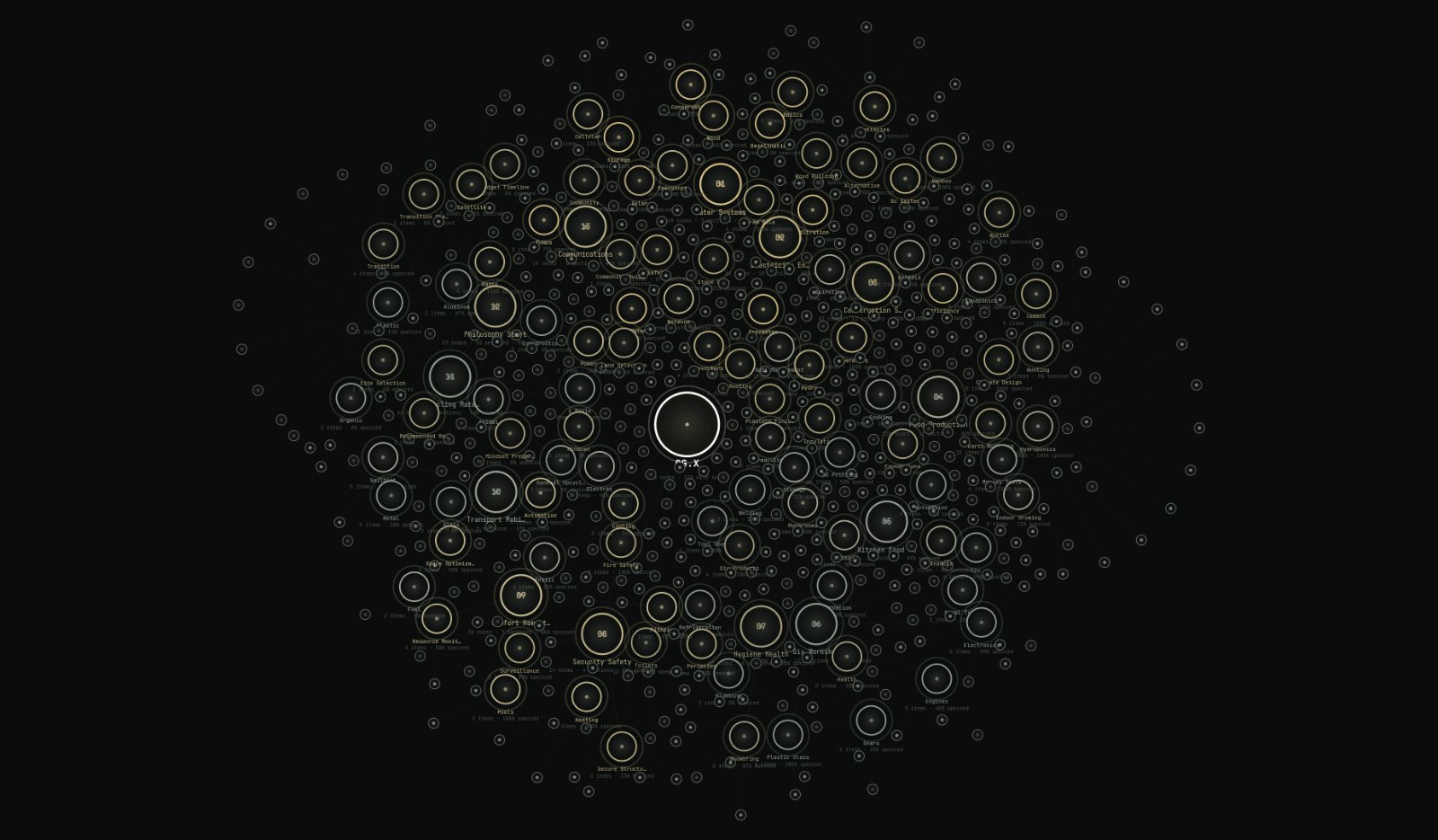
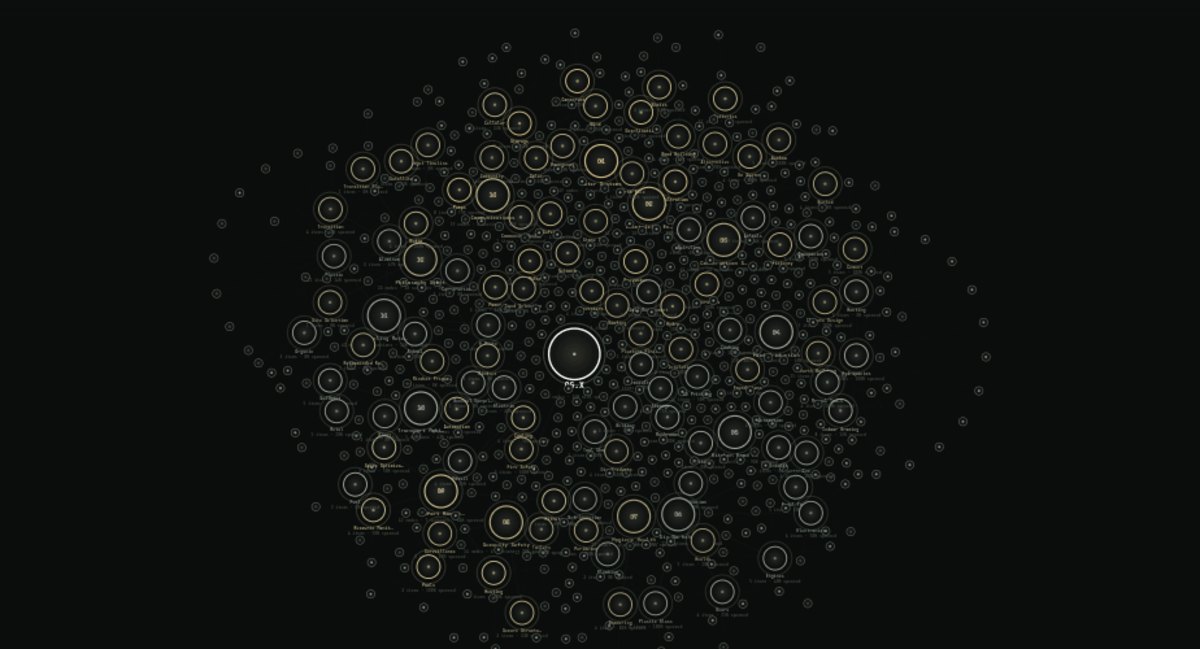
Everything I know as a graph you can walk: {{ nChapters }} chapters, {{ nCats }} sections, {{ nRules }} topics — down to part numbers, wiring, failure modes. Downloadable in full.
Free. Complete. Overwhelming.
Want it condensed? The book is this database cut down to one route — OG EXODUS, below ↓
THE SIMULATOR
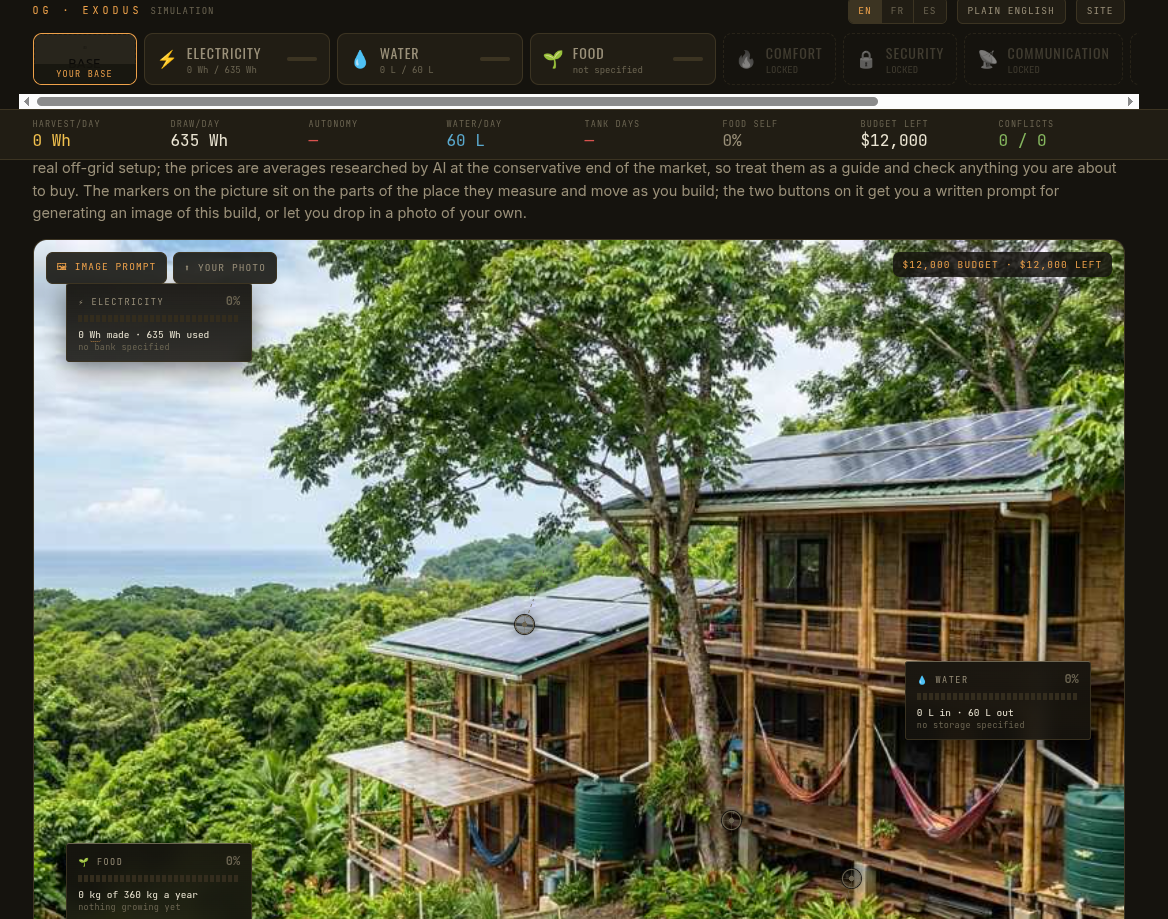
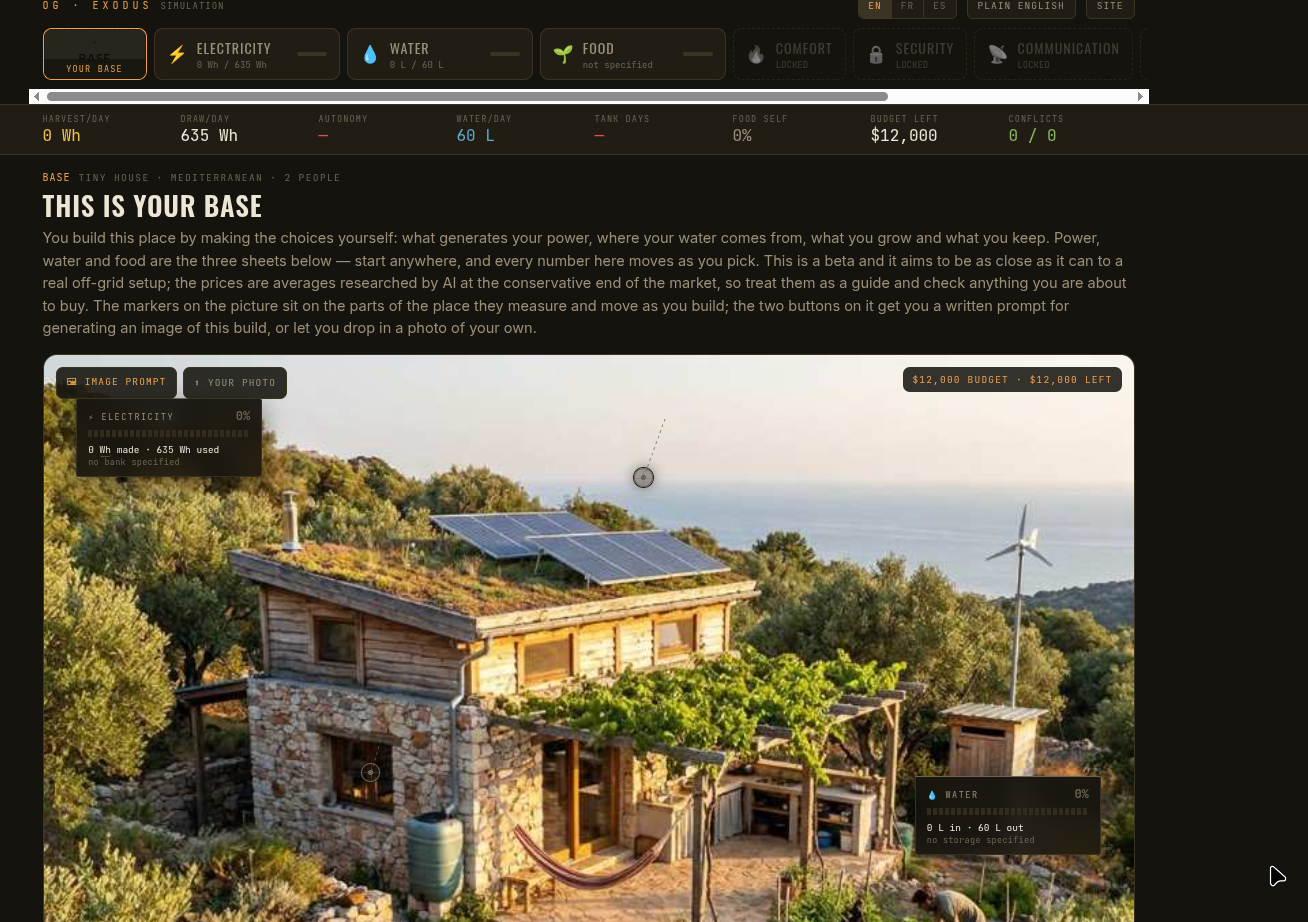
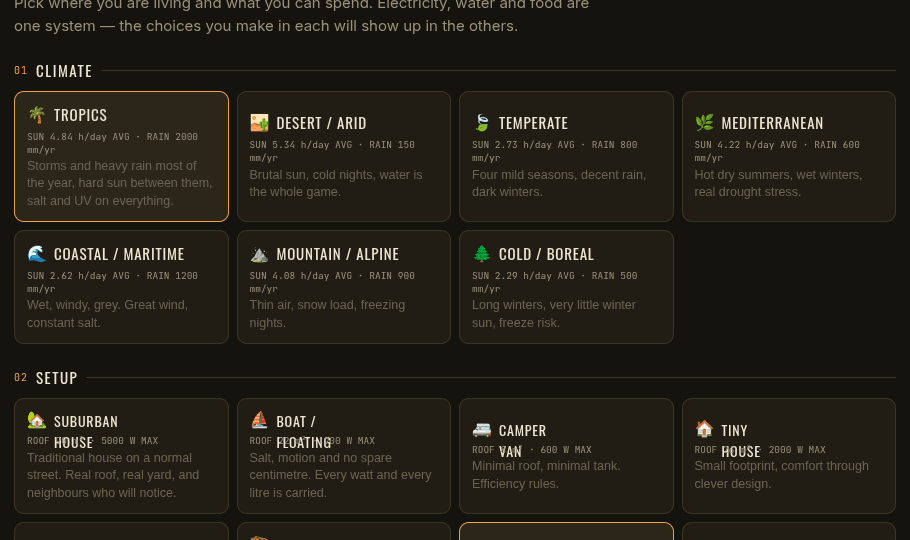
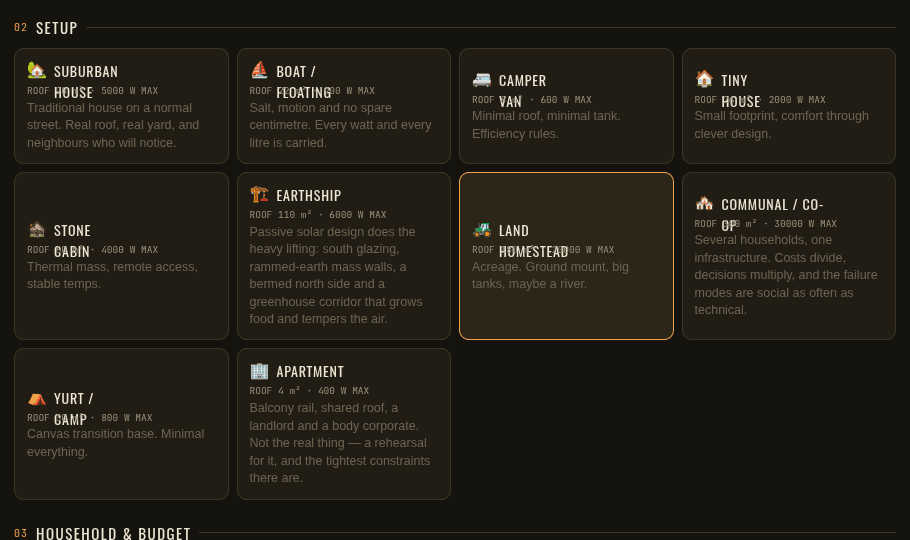
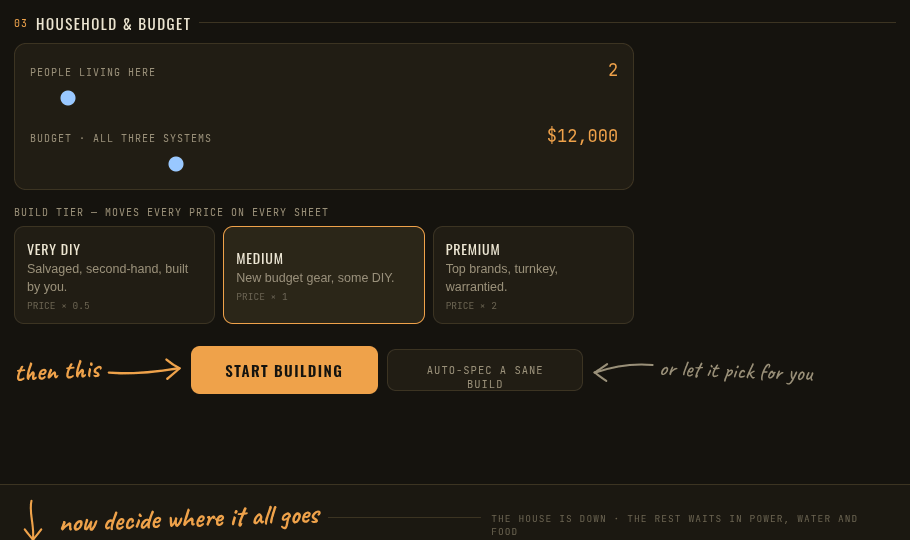
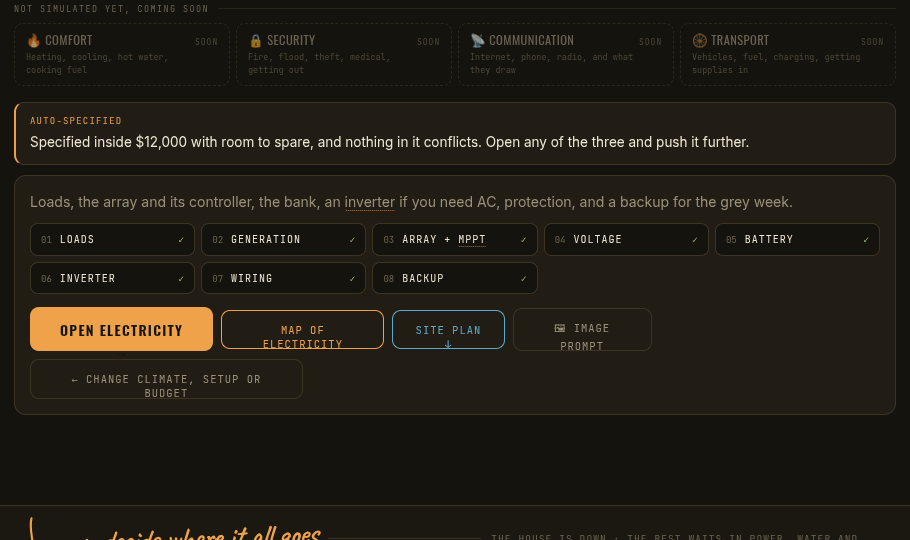
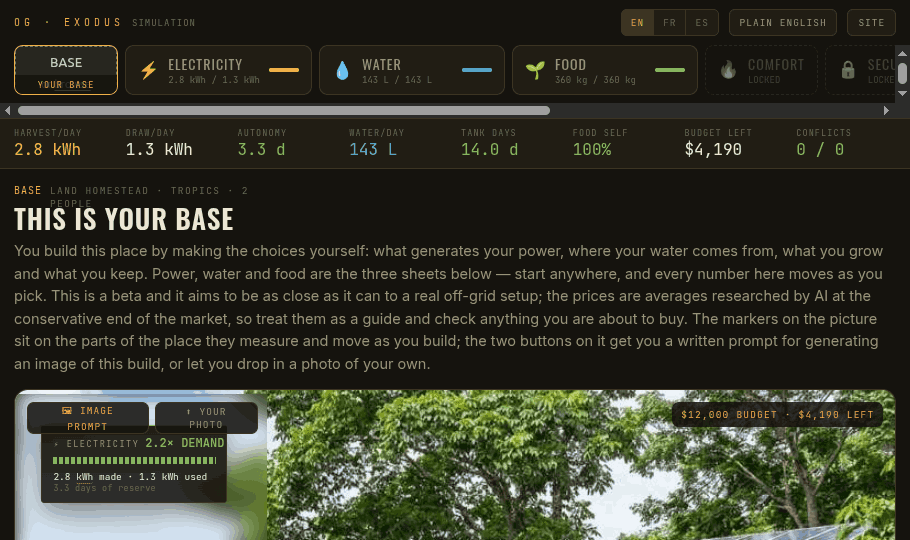
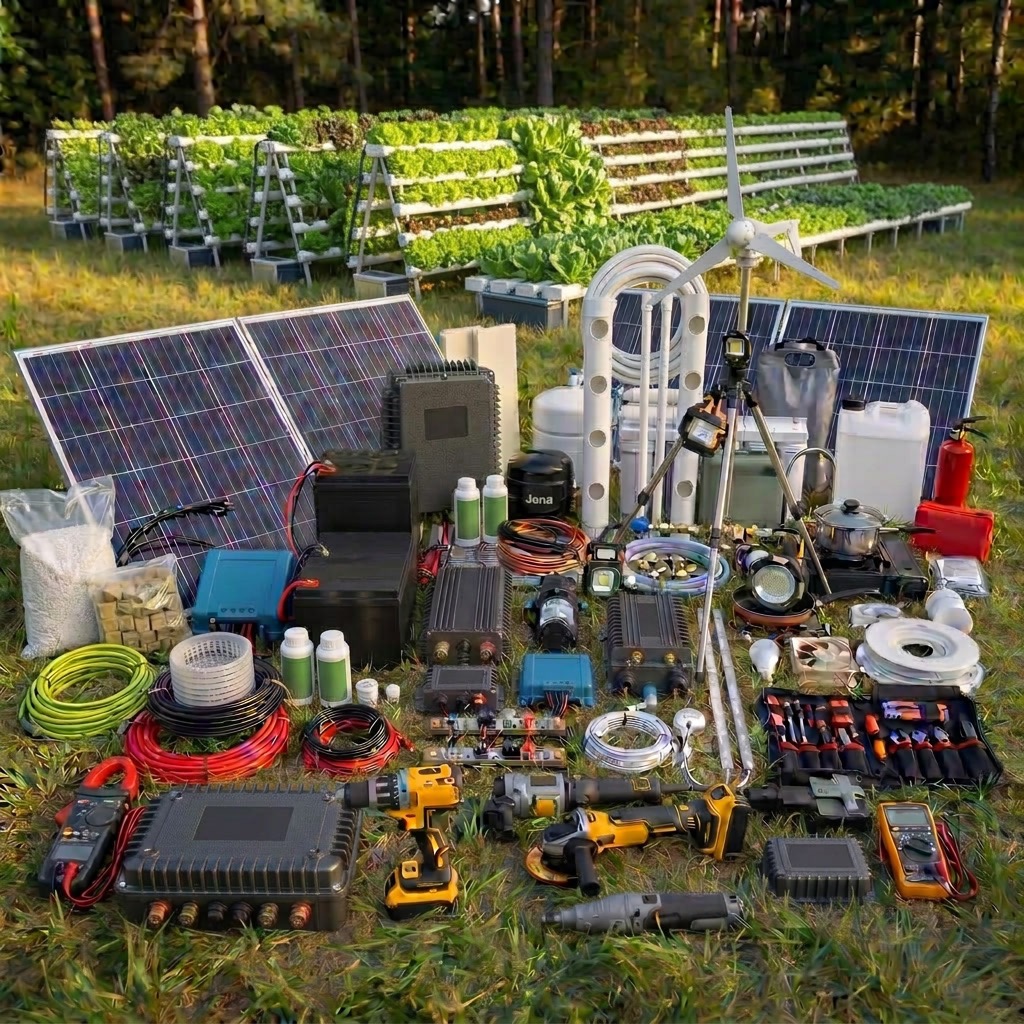
Your climate, your building, your loads. It returns a sized system and shows how each piece constrains the next — panel to controller, controller to bank, bank to inverter. You leave with a spec sheet, and I can help you order against it.
Find out what you actually need.
SOURCING
You have run the simulation. Three one-hour calls turn it into a real purchase: what the numbers actually mean, where to buy each part, and how it all connects.
Buy once. Correct the first time.
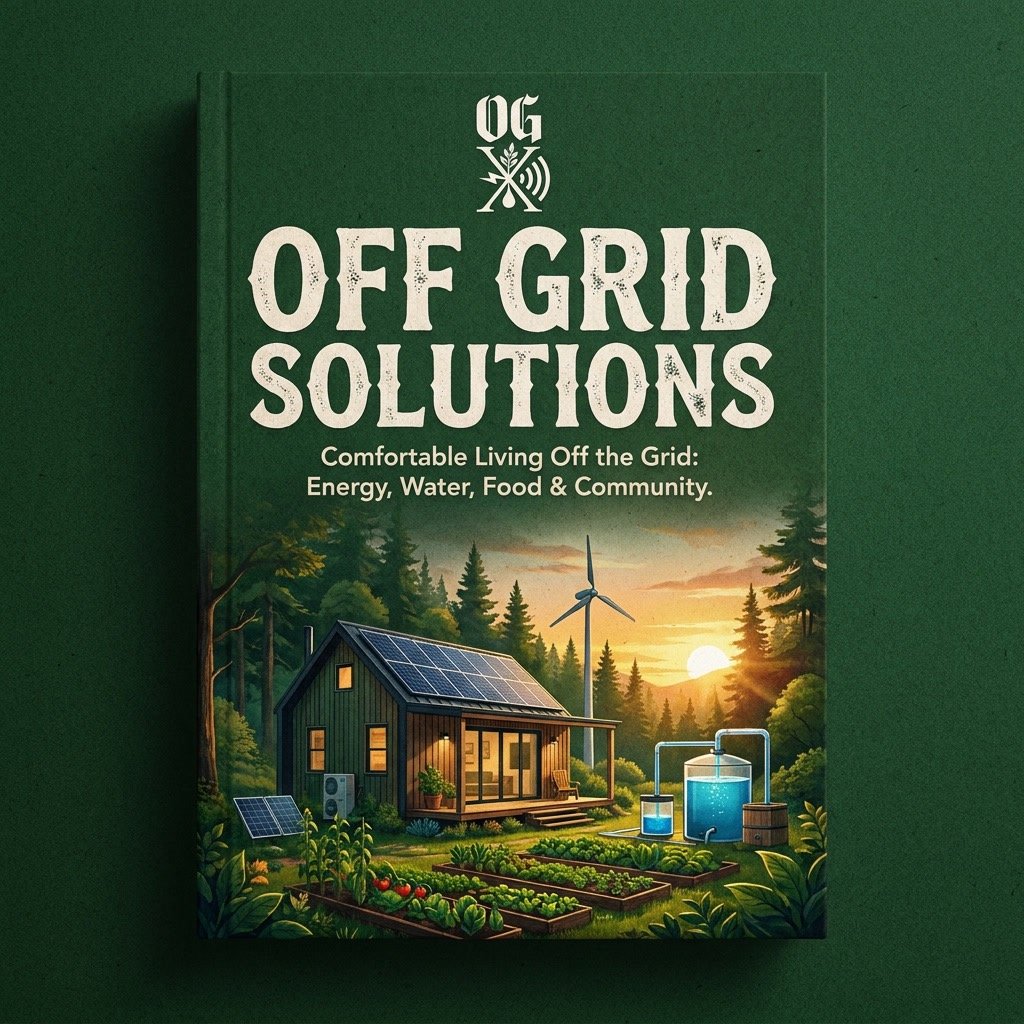
The database is free and it is complete. It is also {{ nodeCount }} nodes deep, and {{ nodeCount }} nodes will not tell you where to start. The book is the same material cut down to one route: what to build, in what order, what it costs, and what I got wrong the first time. Pay what you want, including nothing.
Before you buy a plot, someone should look at the water, the sun and the access. And a short list of places I have visited that are already set up.
Knowledge graph explorer
The full open-source database as an explorable node graph — free, downloadable, and permanently unfinished. The book is its condensed version.
Multi-step sizing tool
Five steps in, one sized system out — climate, building, loads, autonomy, then a downloadable spec sheet.
OG Exodus
The condensed version of the database — donation-based download, no paywall, no email gate.
What to buy, where, and how it connects
Three one-hour calls. We start from what your simulation says you need, work out where to actually buy it, and finish with the wiring and plumbing that ties it all together.
The calls start from your numbers, not from a blank page. Without a simulation the first hour goes on building one, and that is an hour you can do alone in twenty minutes.
We go through your output line by line — what the numbers assume, where your site breaks those assumptions, and which parts of the system are load-bearing. Anything oversized gets cut, anything missing gets added.
and the questions worth settling before buying
For each item on the list: which market it comes from, which specifications matter and which are marketing, what to ask a supplier before paying, and what tends to go wrong on the way to your location. You buy direct — I take nothing from suppliers.
and the order to buy things in
The last call treats the system as one object: voltages and connectors matching, protections in the right places, cable and pipe runs, commissioning order, and what to watch in the first month of running it.
checklist for the finished install
11 years learning about living sustainably, learning online, volunturing and working for people as well as creating my own set ups too
The story, the systems, everything that broke and everything that worked — some of the trial and error too, in the order it happened.
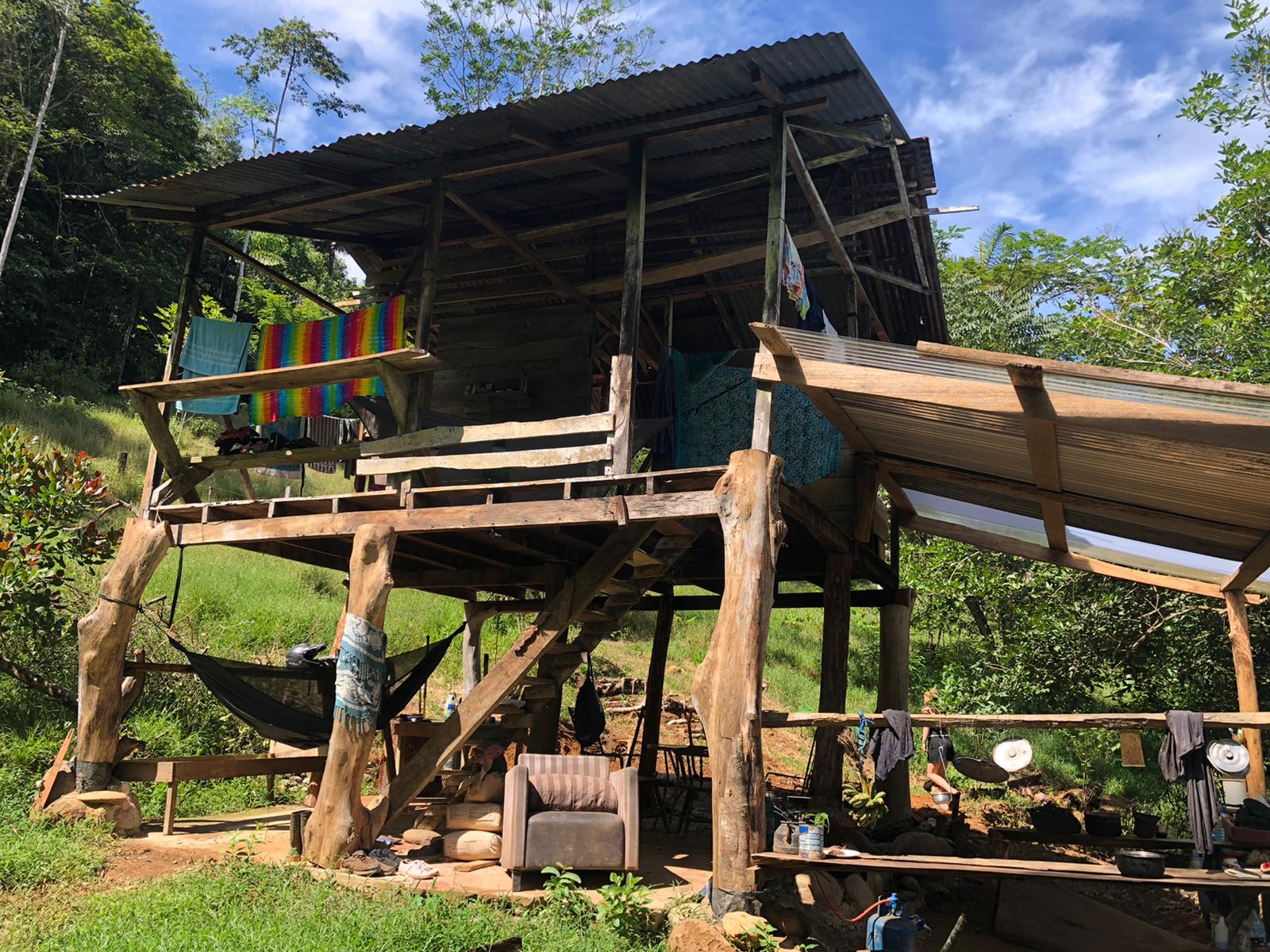
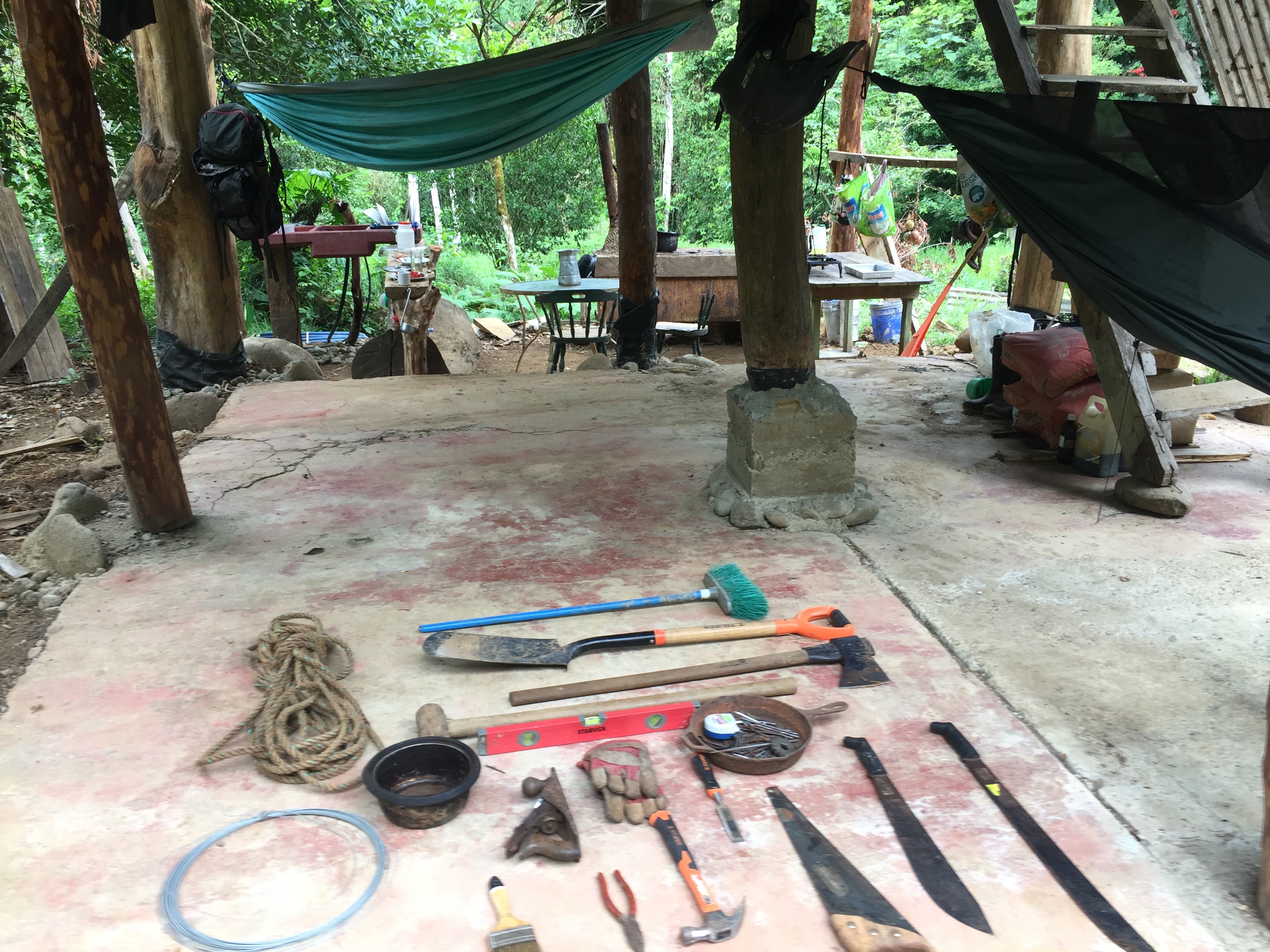
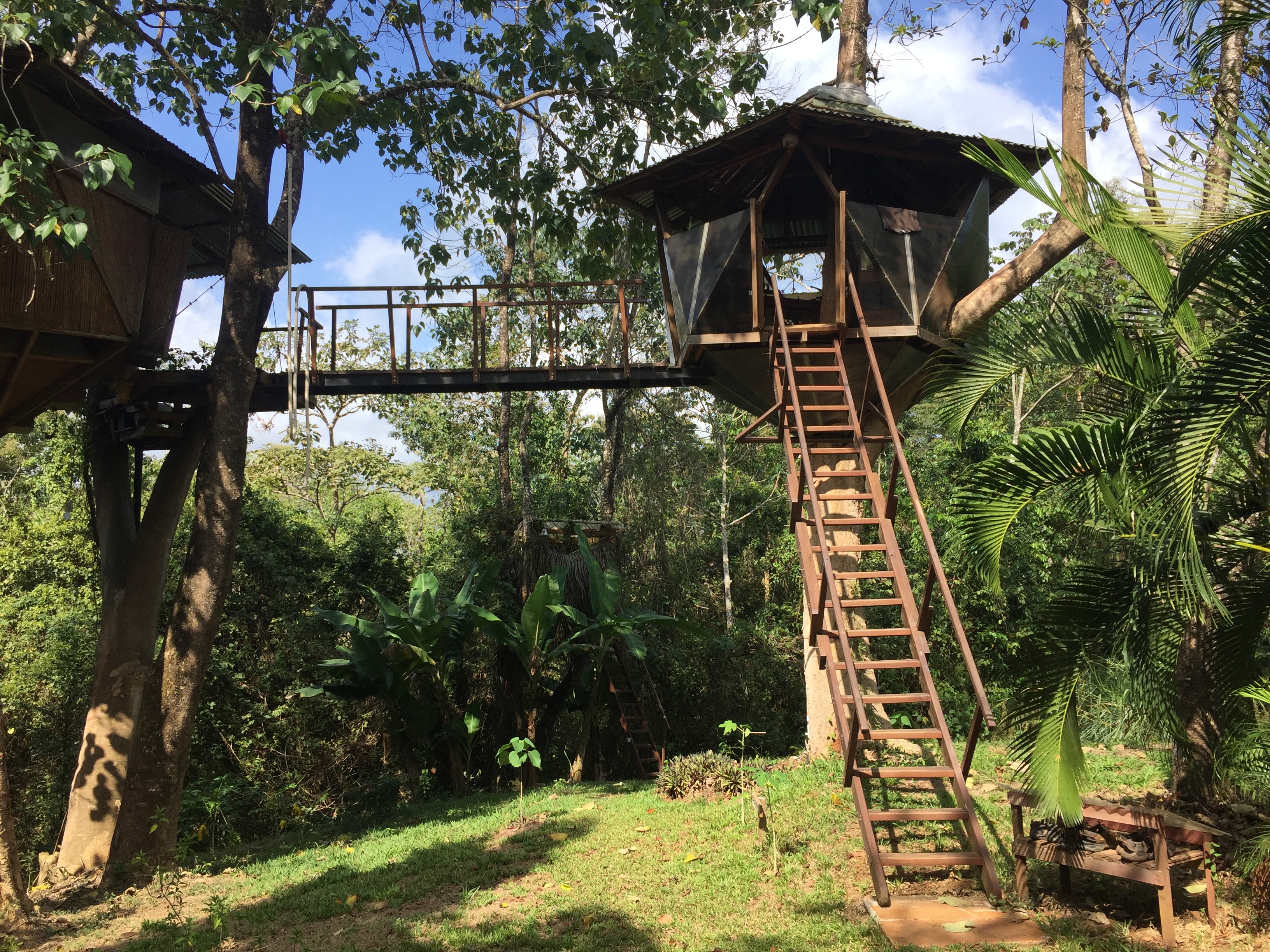
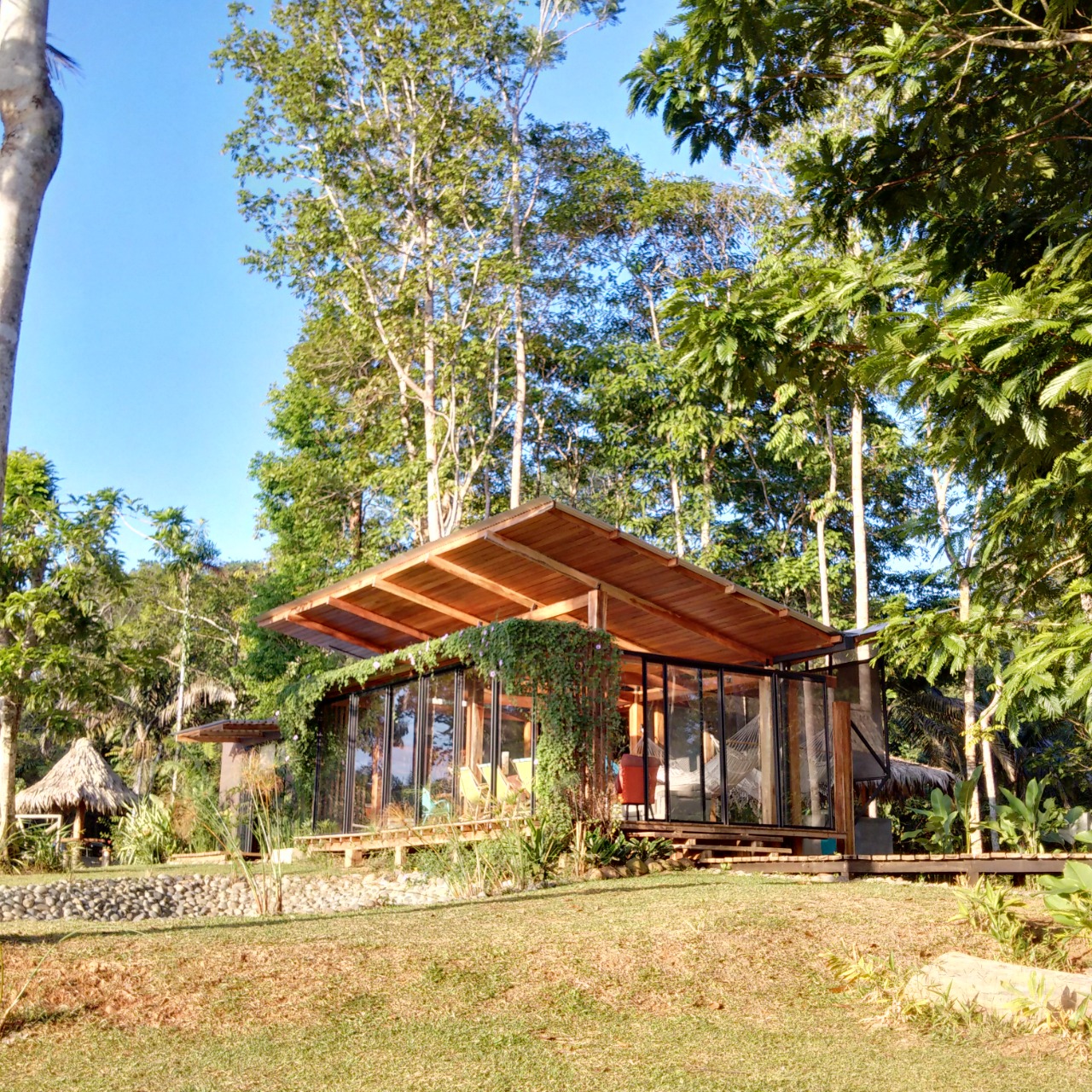
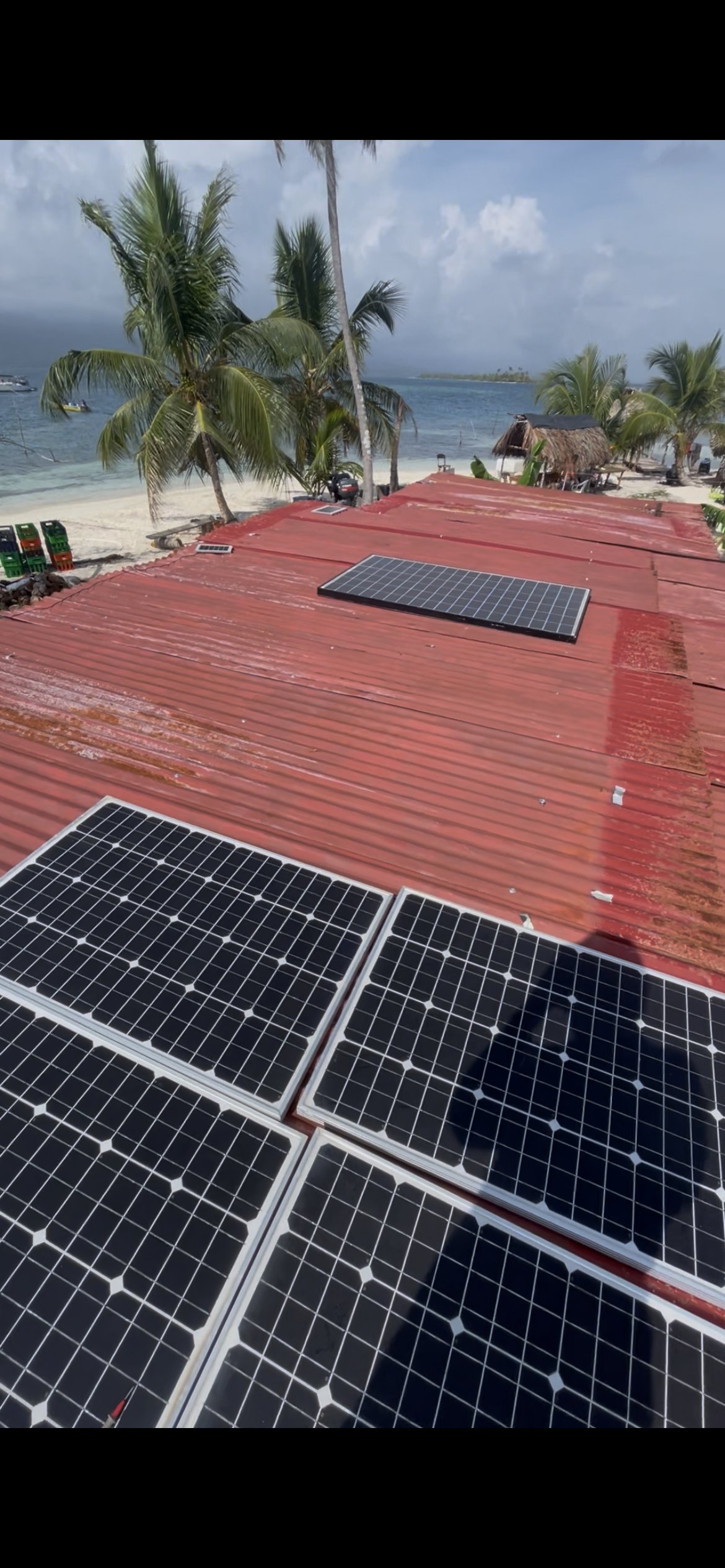
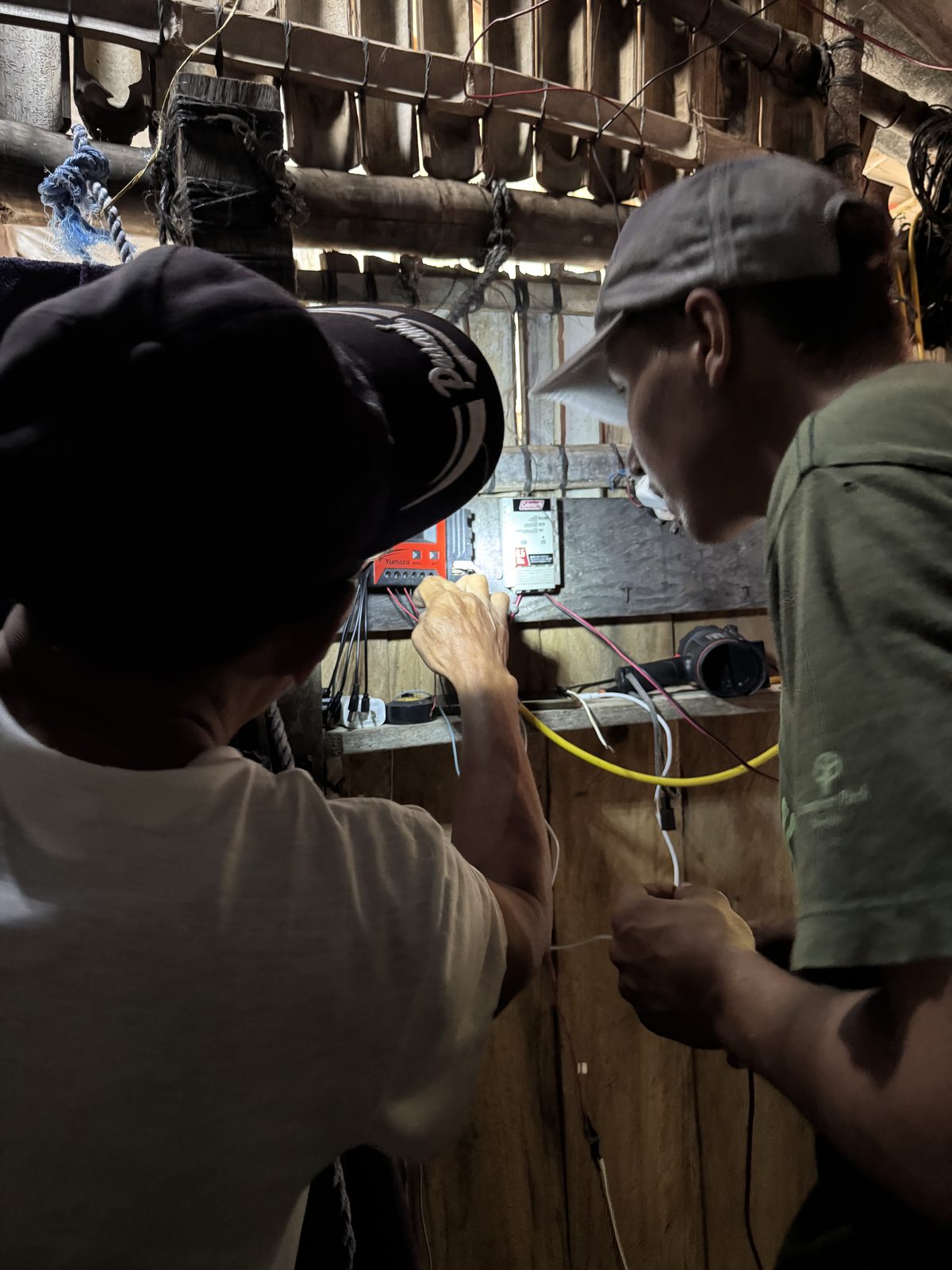
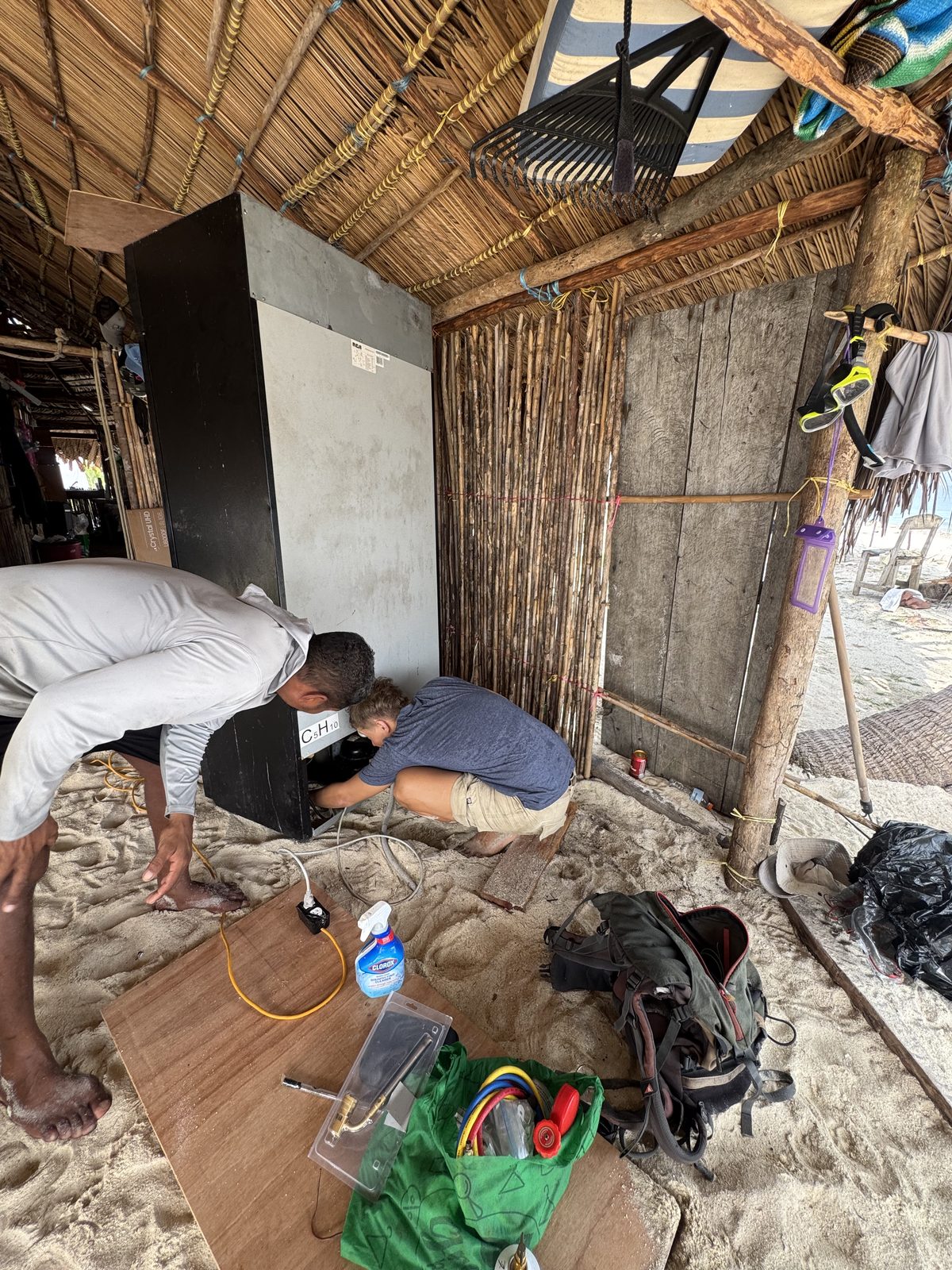
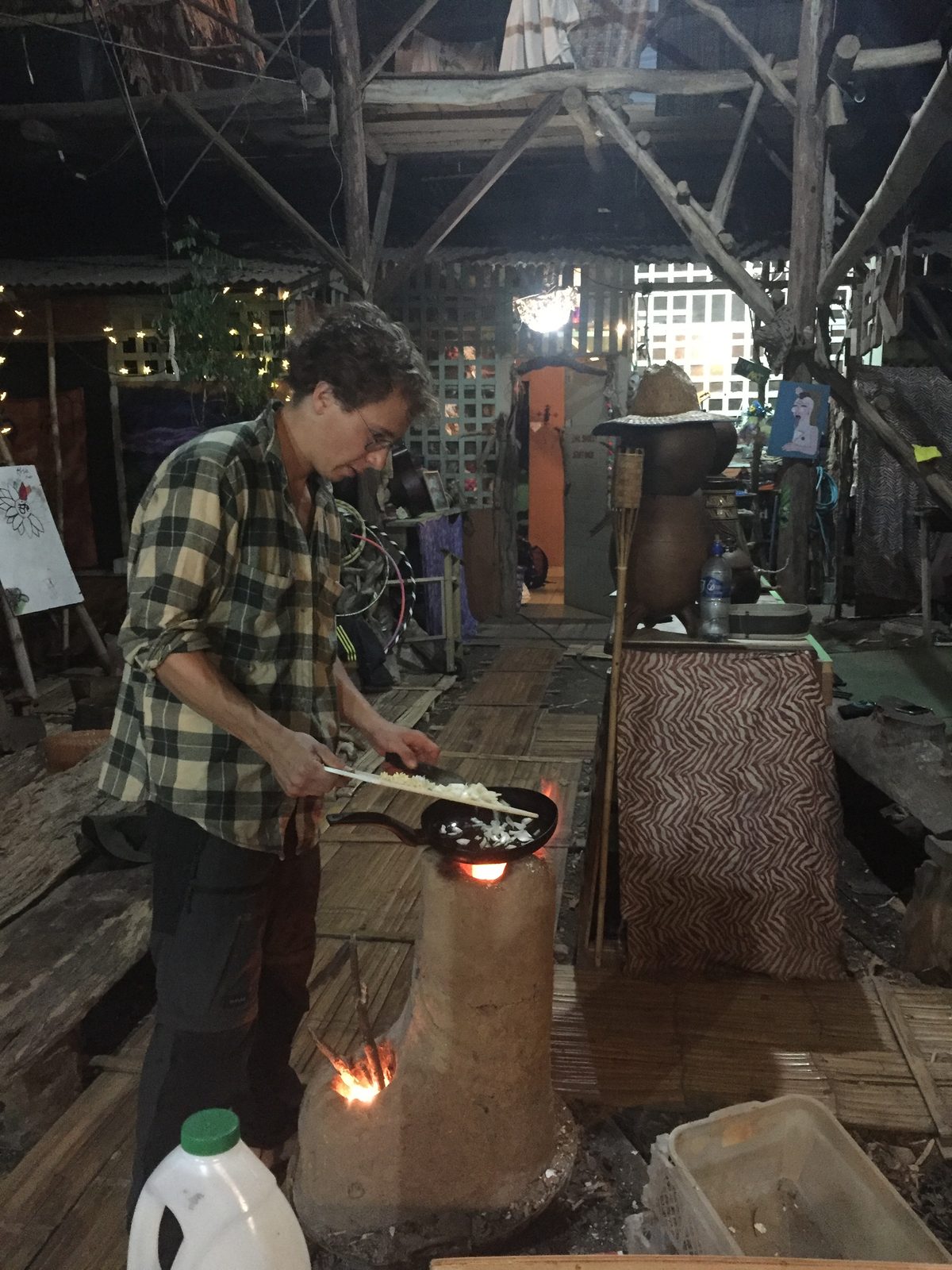
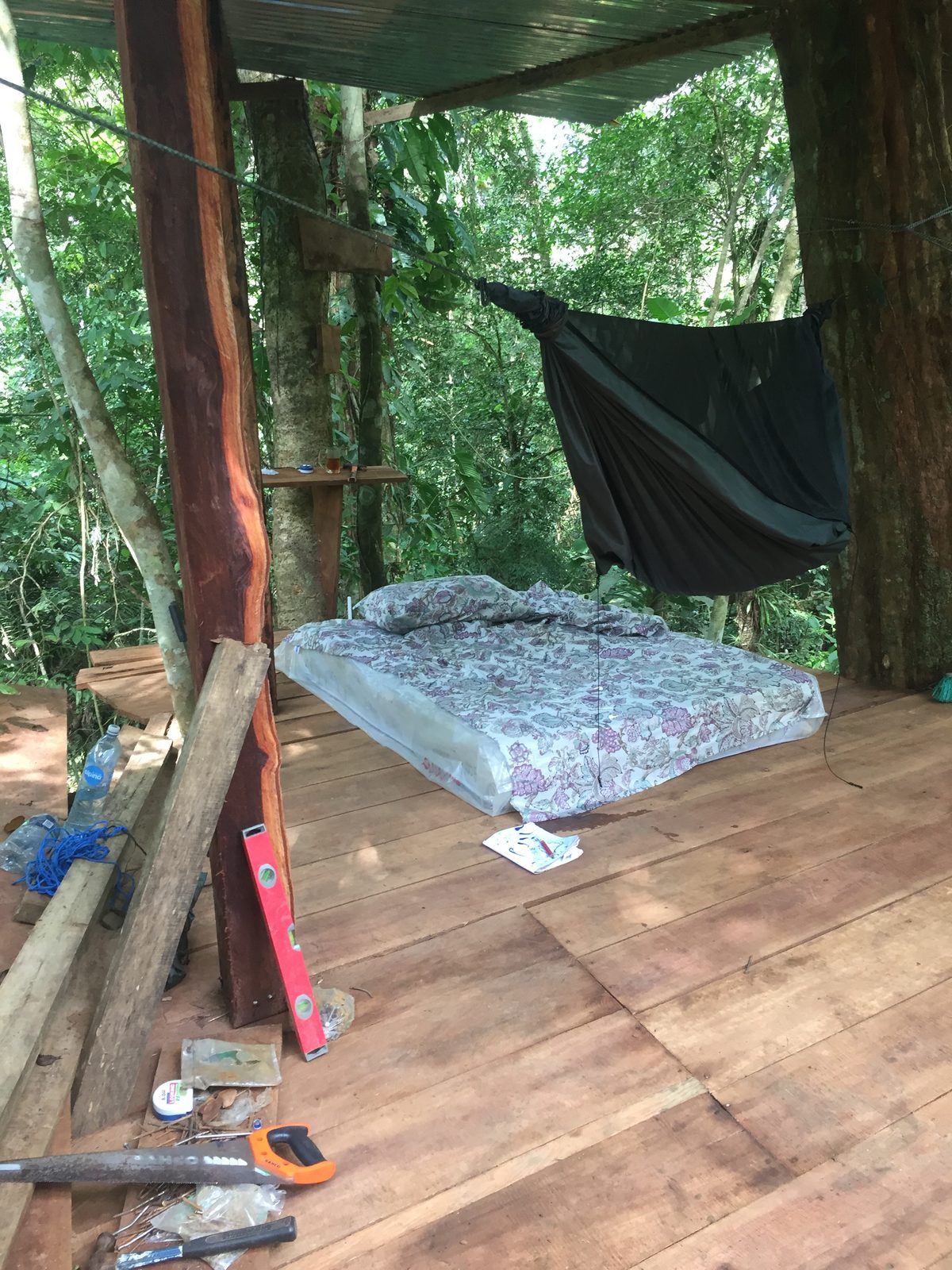
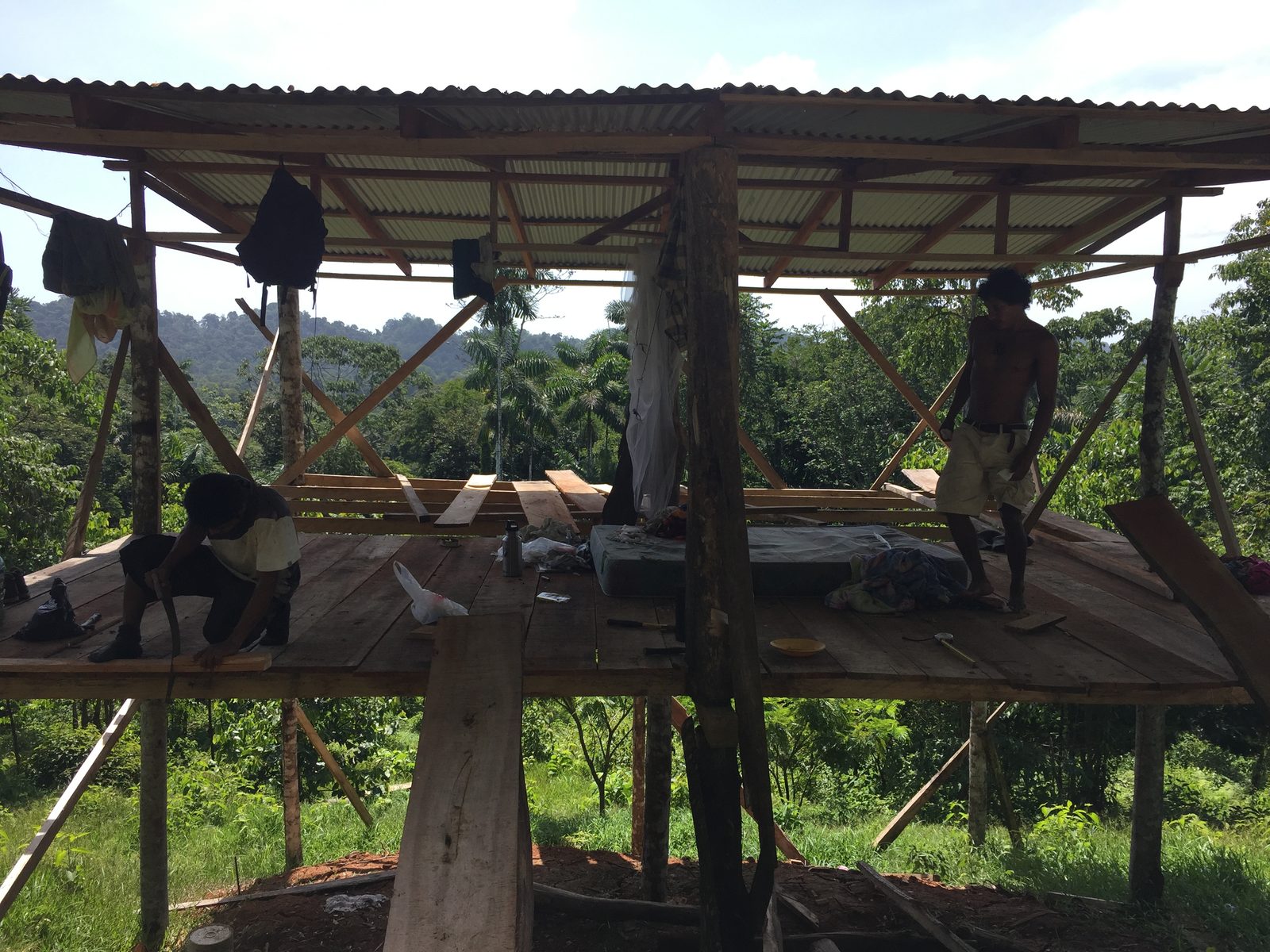
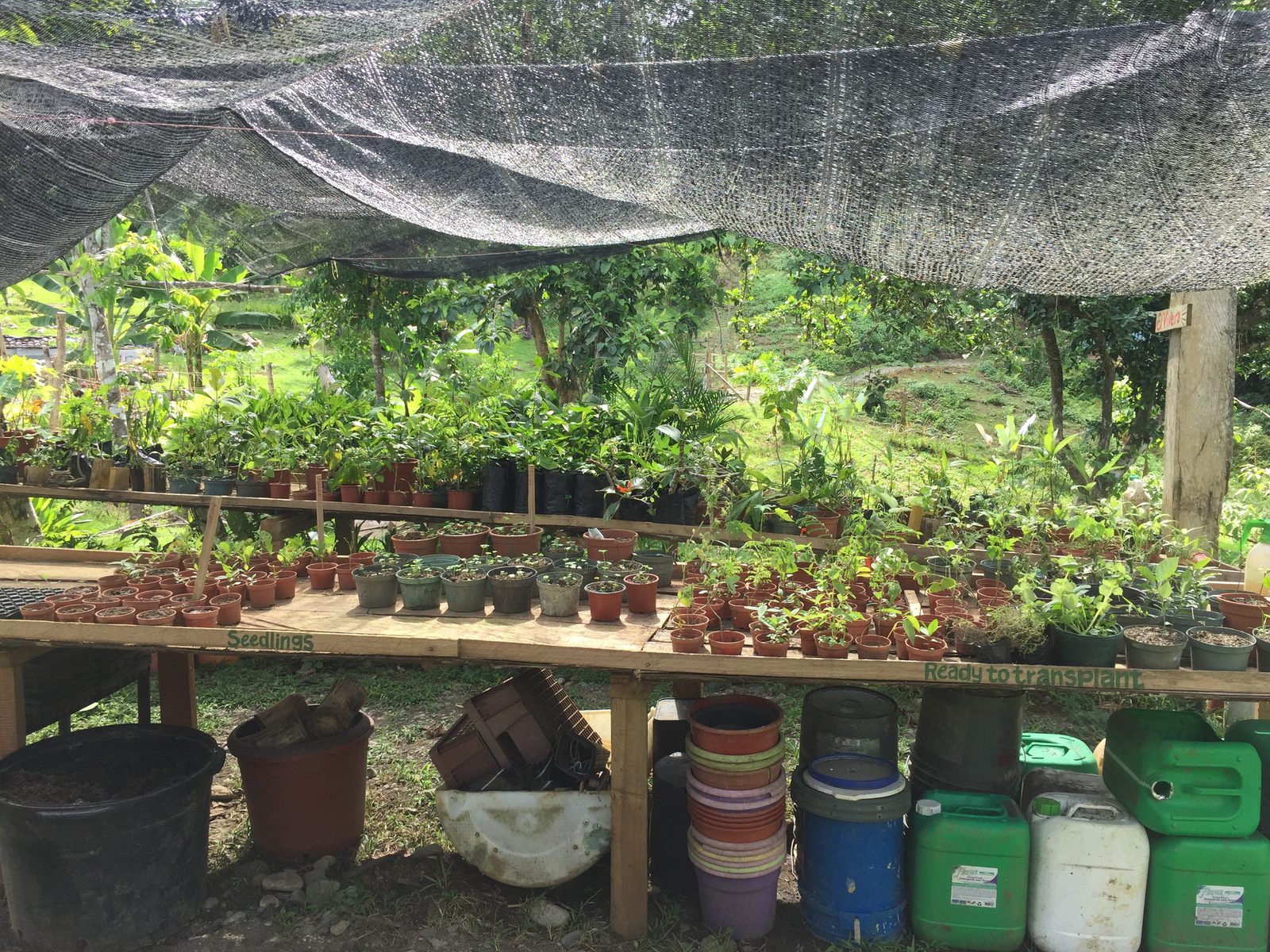
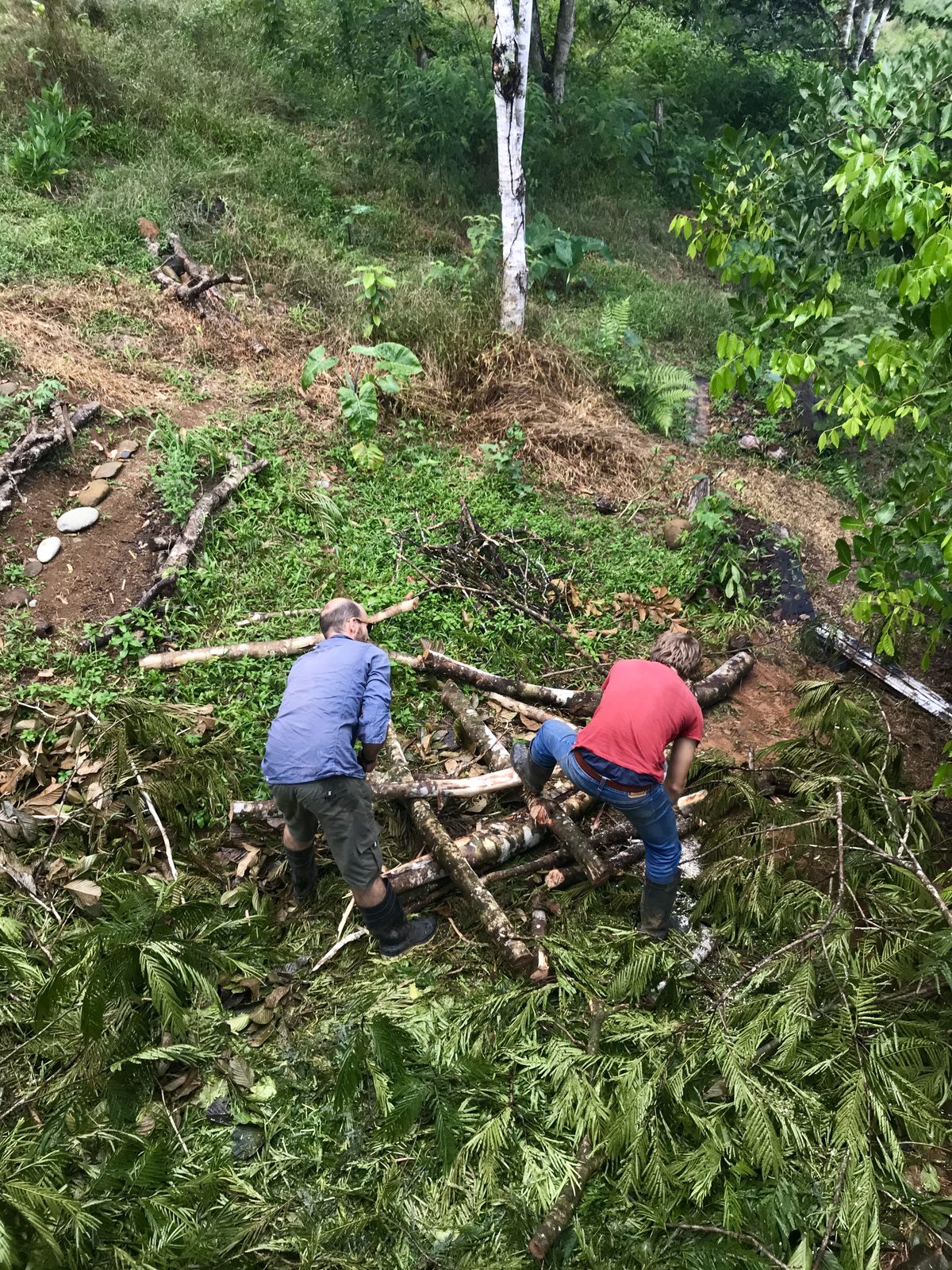
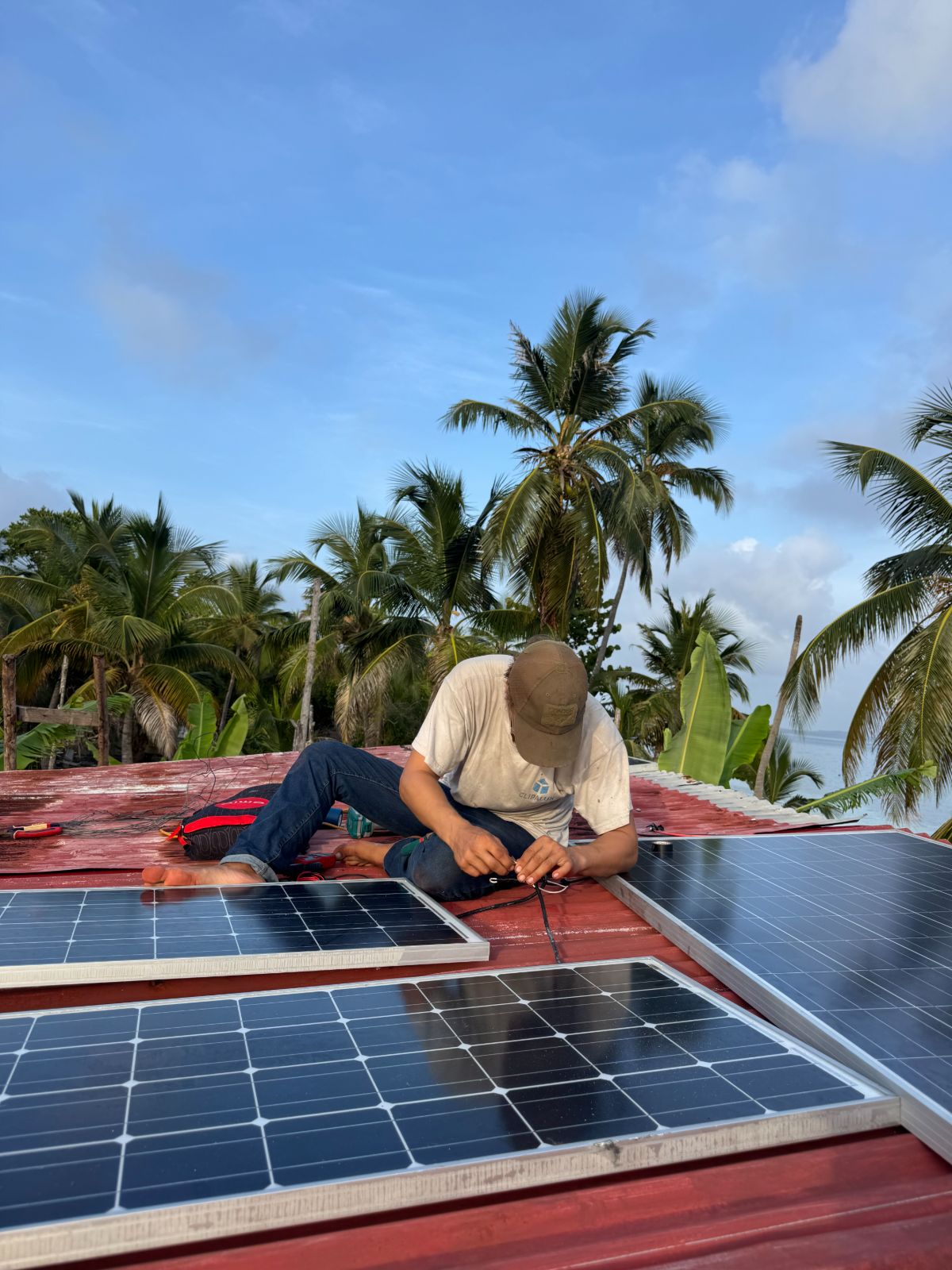
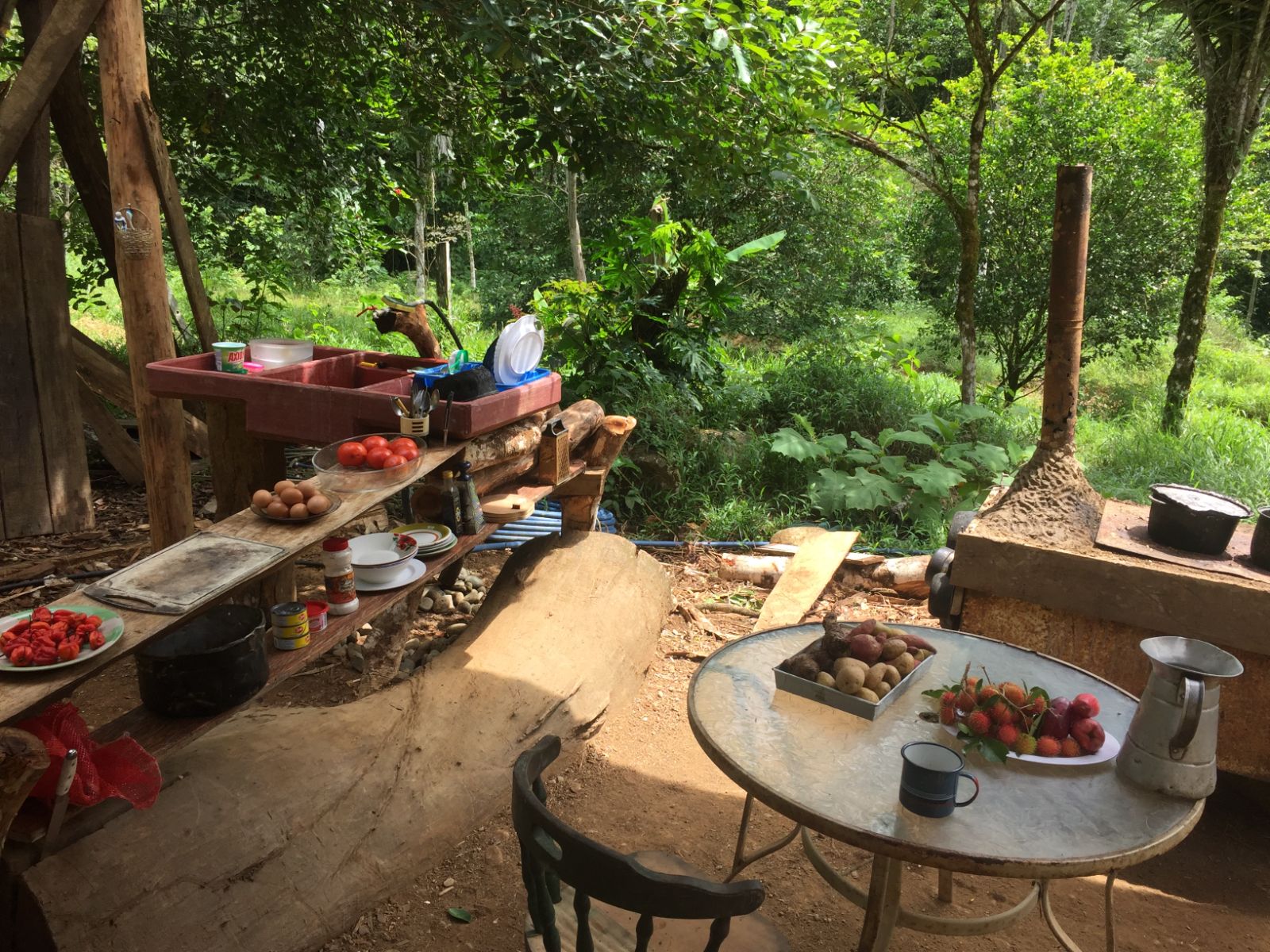
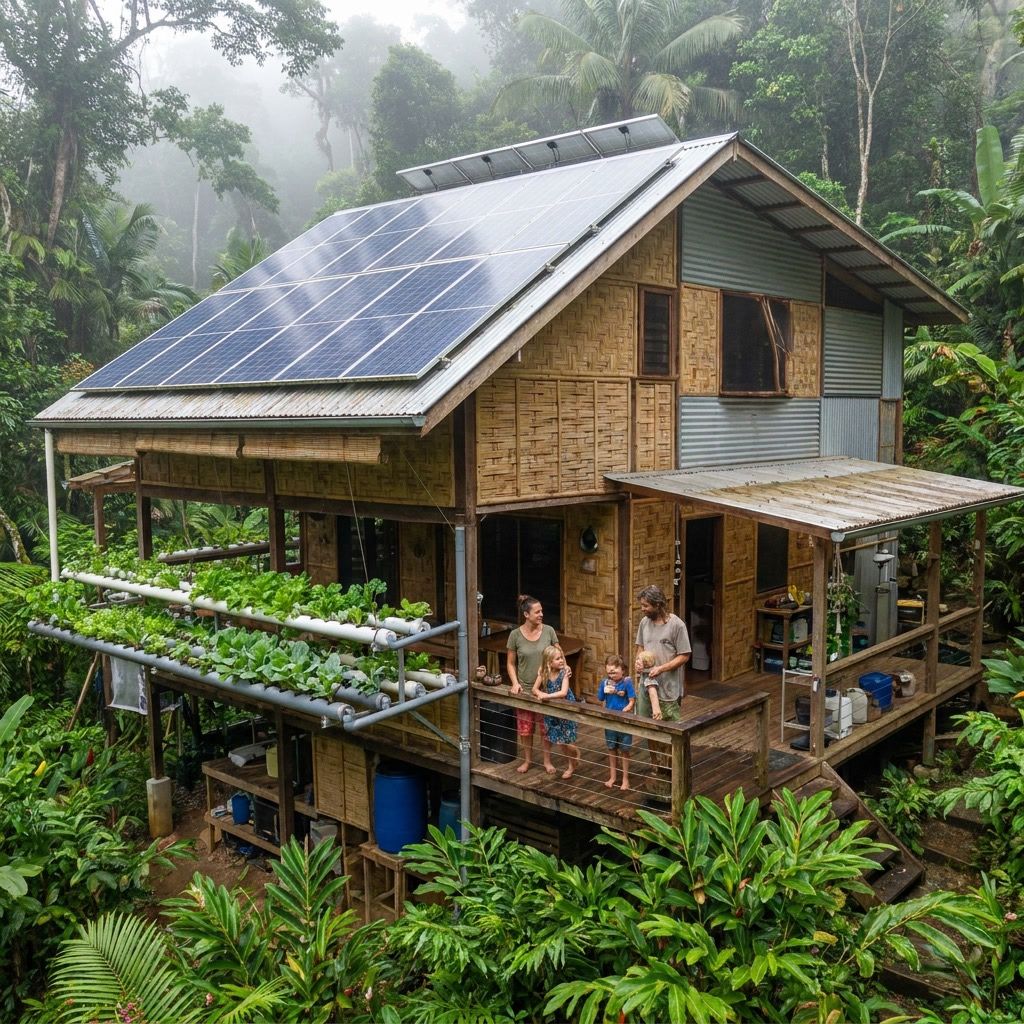
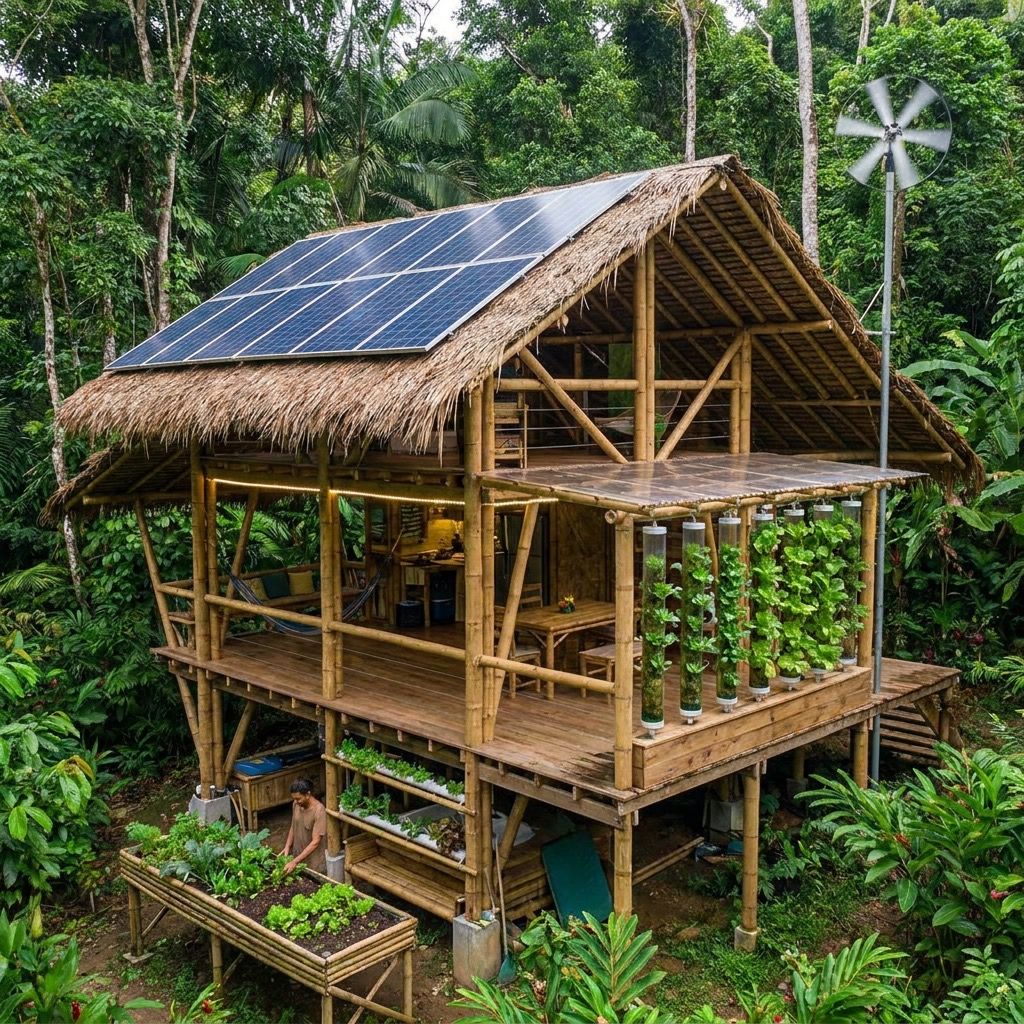
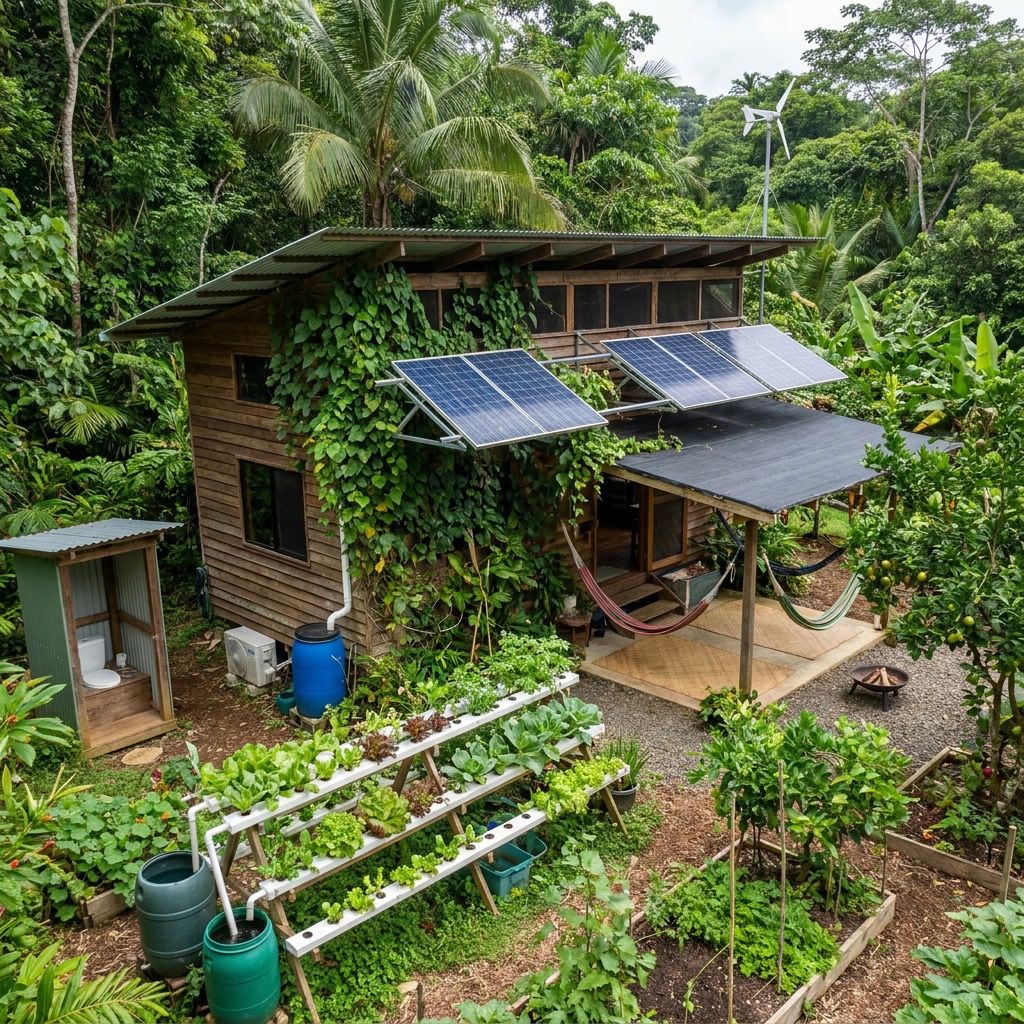
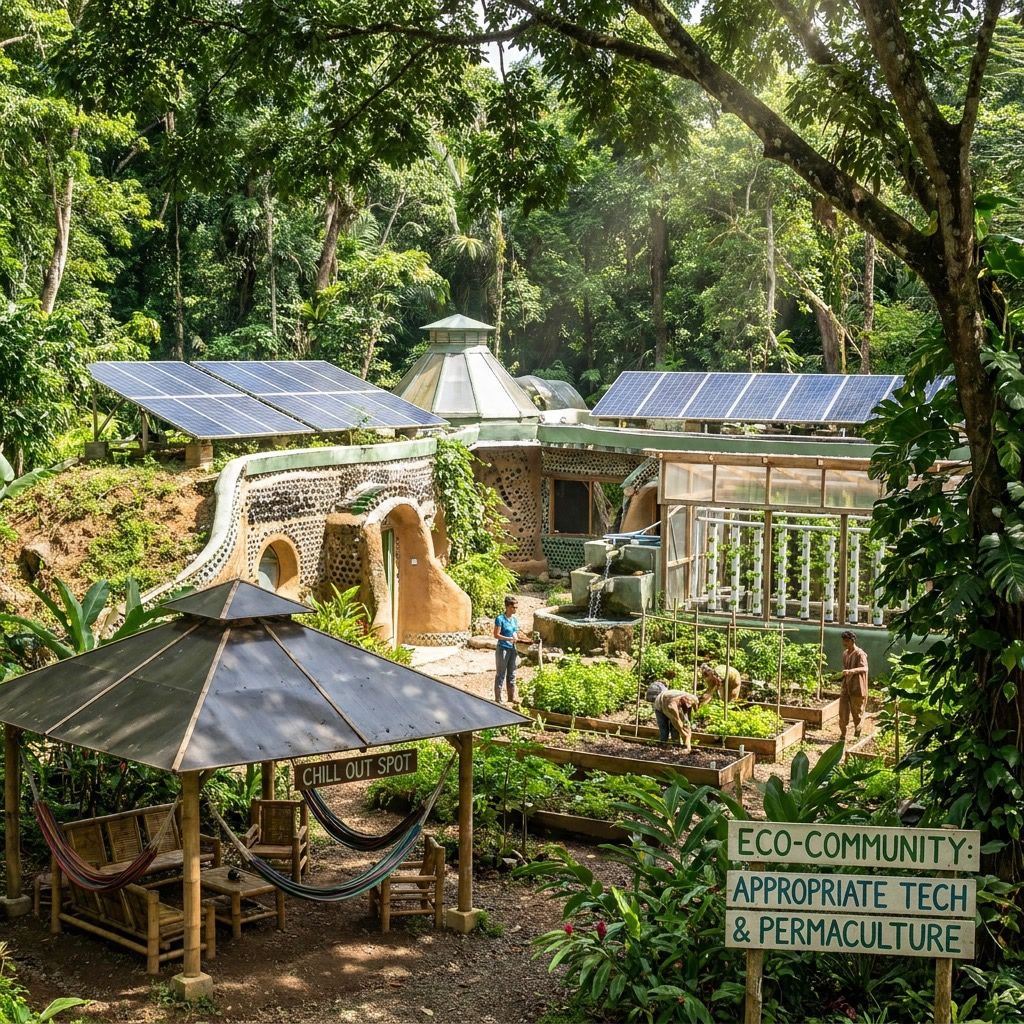
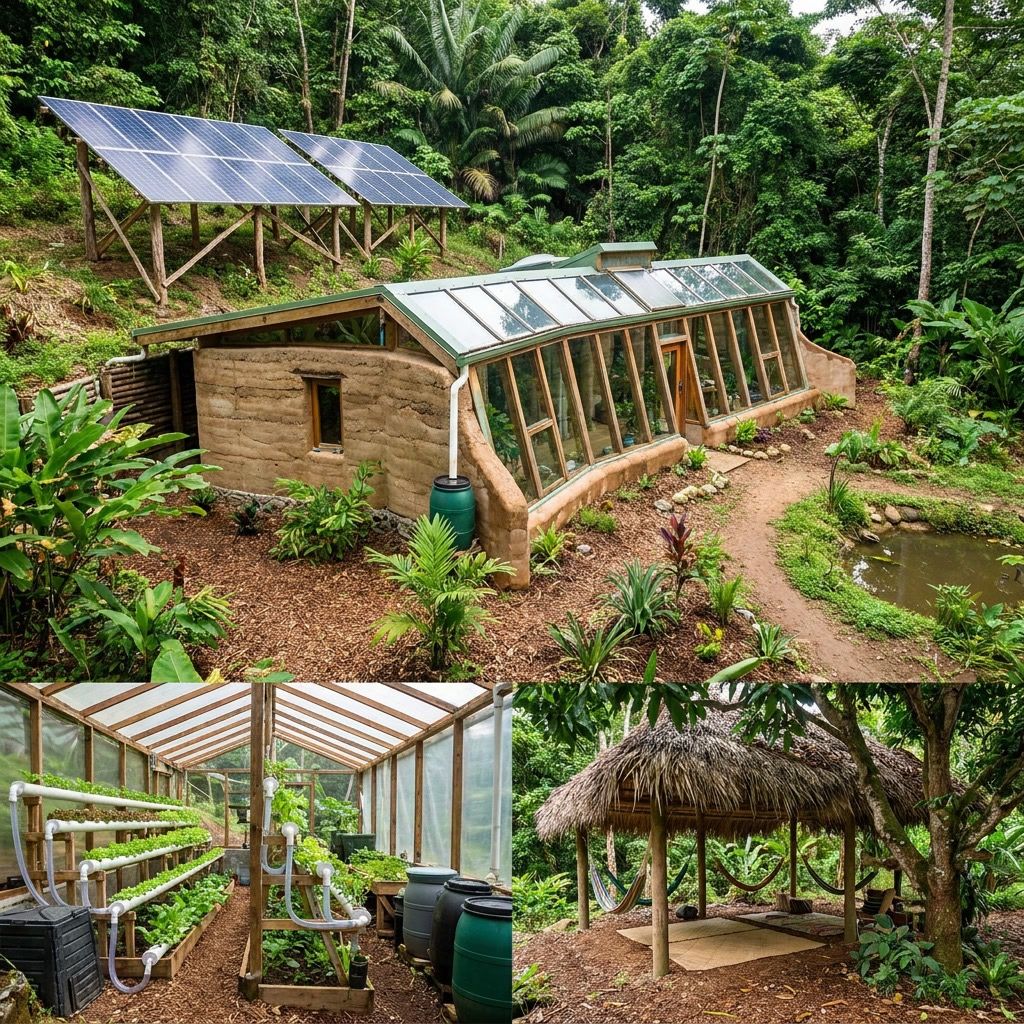
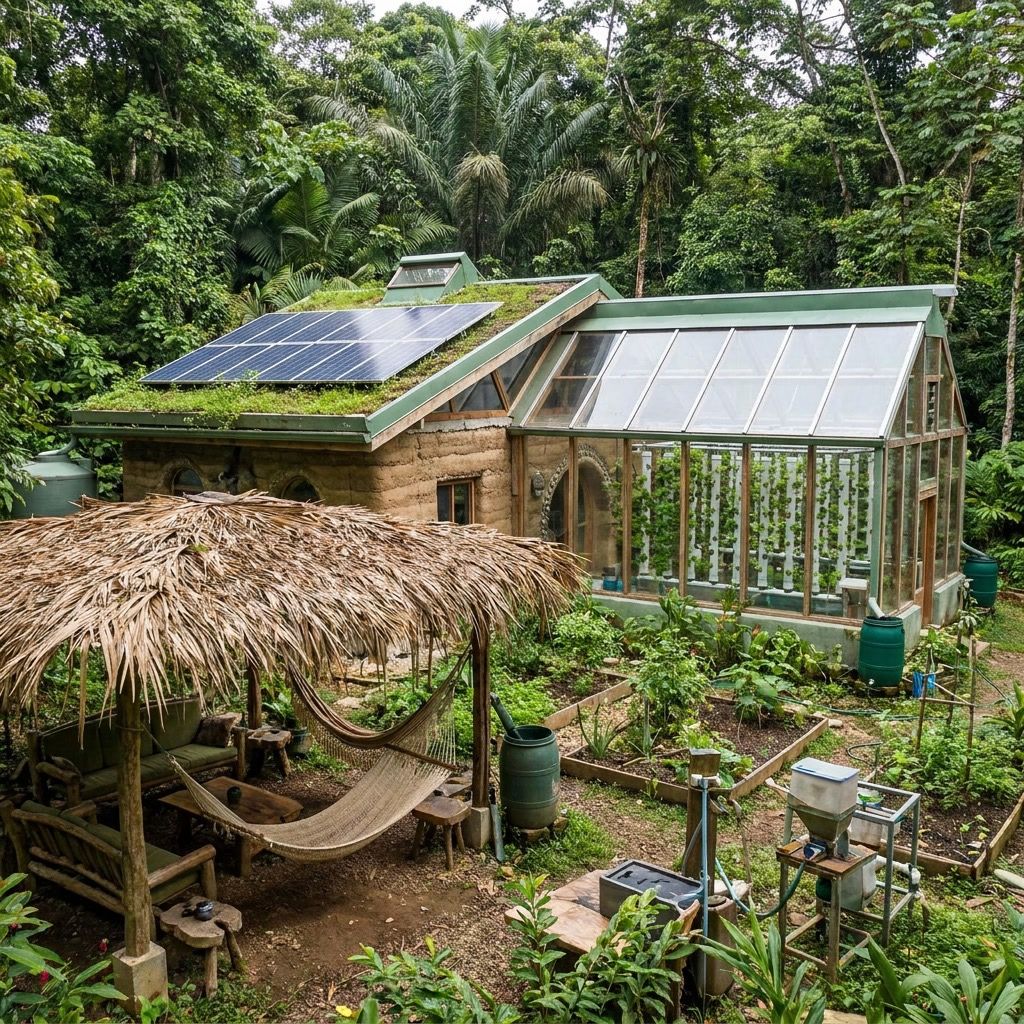
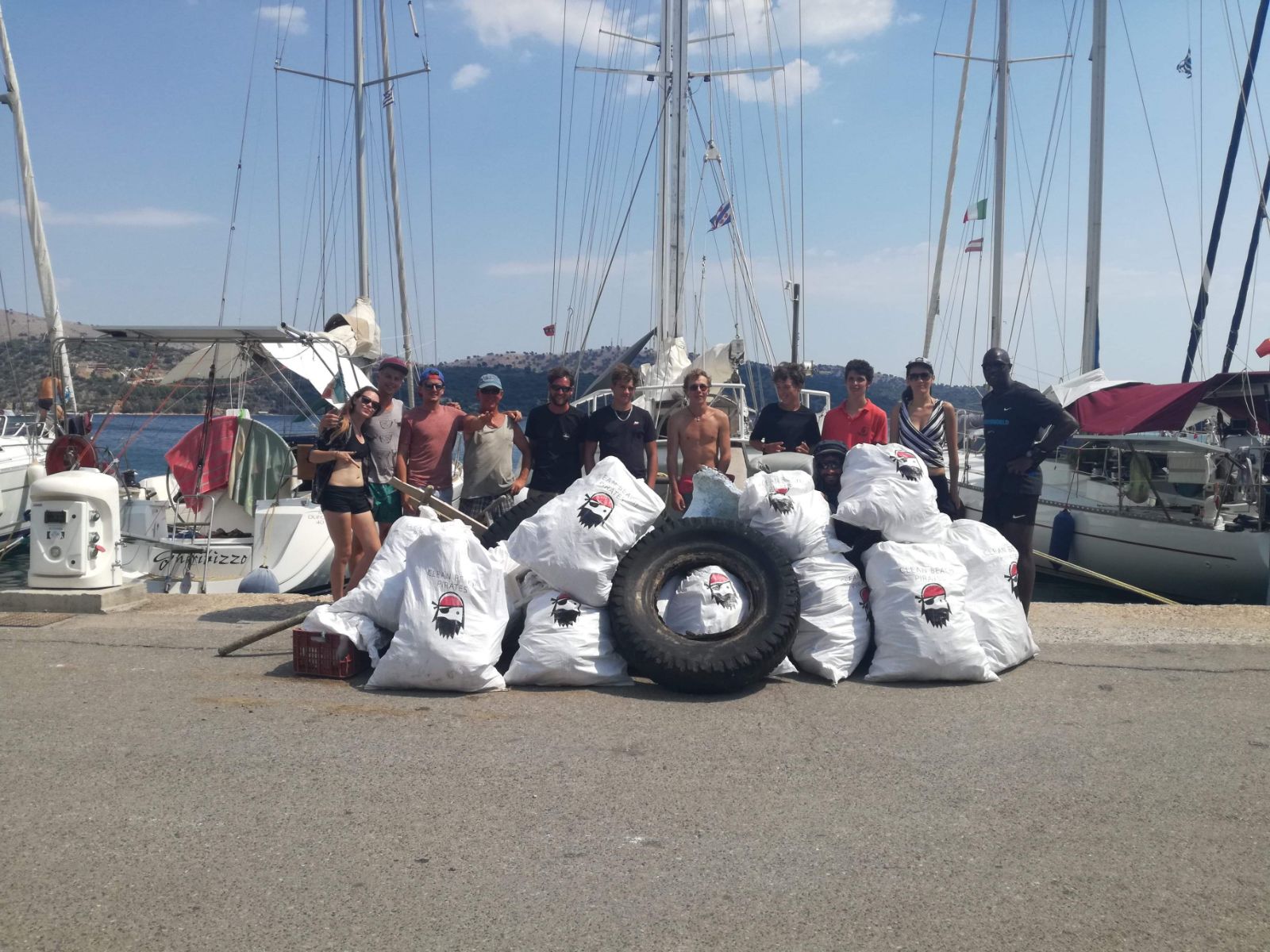
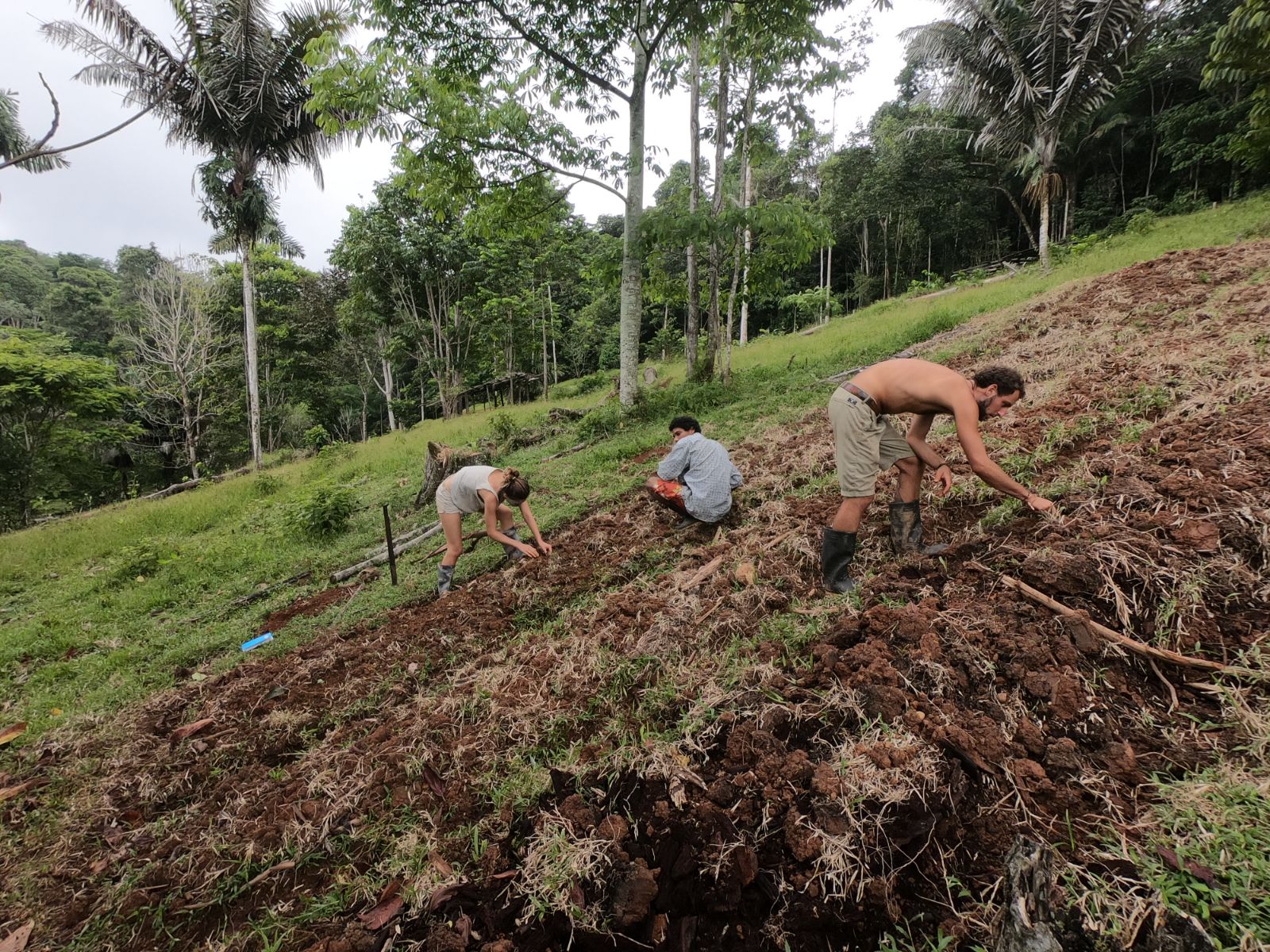
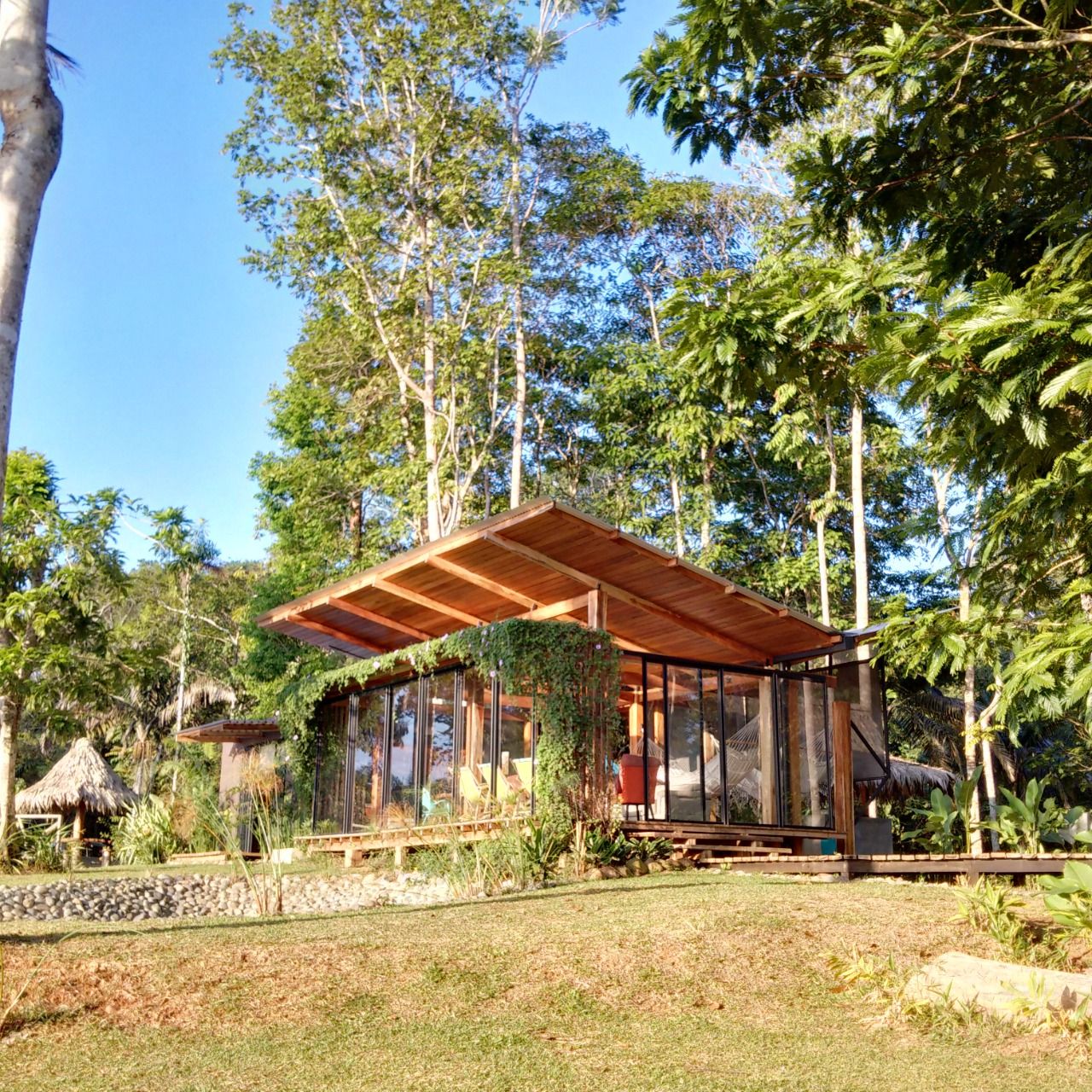
It started in the Mediterranean, 2016 to 2019 — a first boat running 200 W of panels into lead-acid, only USB plugs and lights, no watermaker. From 2019 to 2021 in Costa Rica, a jungle plot: no solar, no lights, only recycled kitchen oil for lamps, a neighbour to occasionally charge phones and external batteries, no gas system for the first year, a rocket stove prototype to make coffee, water supplied by gravity from a nearby creek. I also built myself a treehouse — my most hippie setup so far. The two years after that, 2021 to 2023, were spent volunteering on homesteads — pumps, dryers, cold rooms. Since 2023 it has been San Blas: an autonomous sailboat, and systems built for locals and charter boats.
One folder per thematic, matching the database chapters. Everything filmed on the boat and on site goes into the folder it belongs to.
Site checks, and places that already work
Two things. A paid site check on any plot you are considering, before the money moves. And a short list of places I have visited in person that are already set up to live on.
No commission from sellers. A flat fee from you for the check, and nothing else.
Land is sold on the view. What decides whether you can live there is water in the dry season, sun in the wet one, and whether a truck or a boat can reach you when something breaks. I go through the listing, the maps, the rainfall record and your photos, and tell you what the build costs on that specific piece of ground — or that it does not work, which is the cheaper answer.
{{ k.body }}
Places I have stood on. Water source, power and access already sorted, or close enough that the remaining work is listed honestly.